
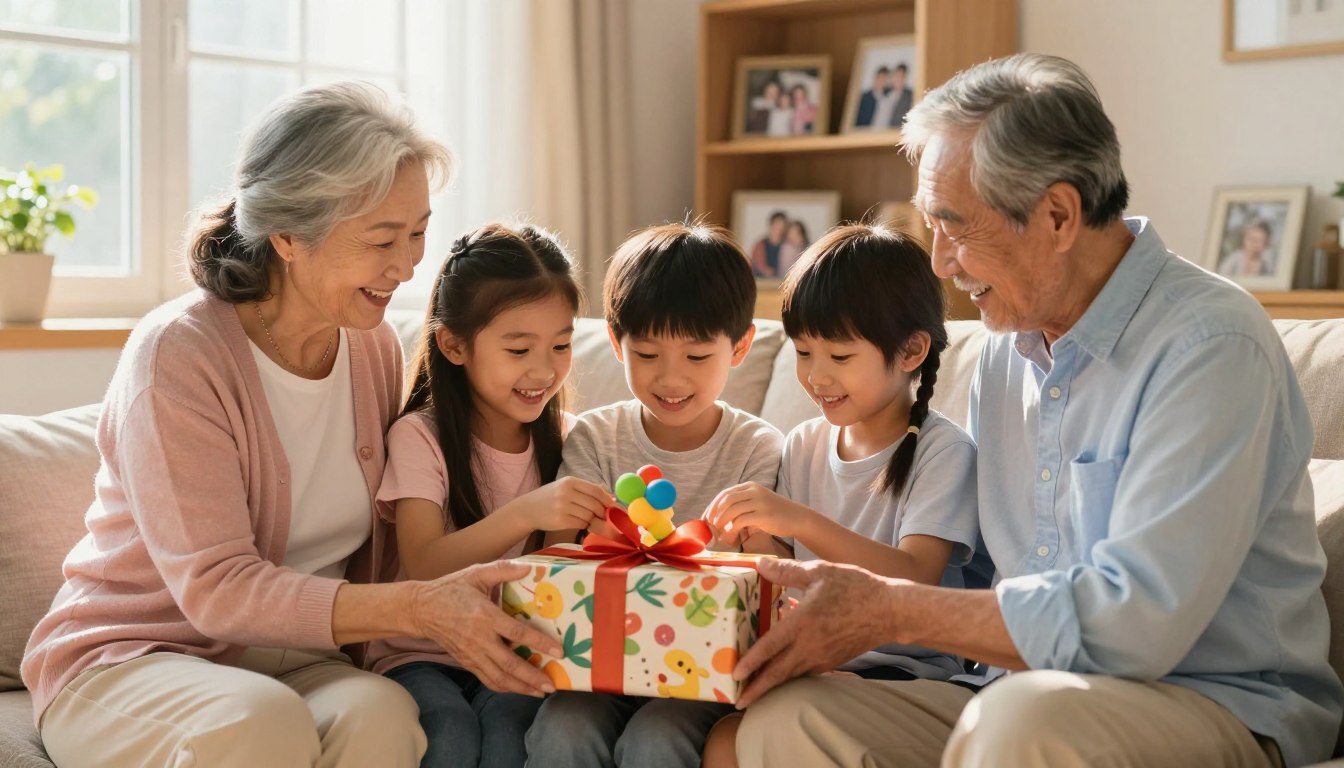
Visiting your grandkids can be special with a small, personal gift. Personalized items show you care and make ordinary gifts special. They remind your grandkids of the bond you share.
Research from the University of Illinois Chicago shows kids aged 3–5 love physical gifts more. At this age, they remember things better with something they can hold. A stuffed animal or a photo mug can make them happy again and again.
But, as kids get older, they start to like experiences more. Teens (13–17) enjoy remembering events they’ve had. So, give younger kids things they can hold, and older kids experiences to enjoy together.
To make the most of your visit, mix a special experience with a keepsake. A small photo album or a favorite snapshot can remind them of the day. It helps younger kids remember and strengthens your bond.
Key Takeaways
- Personalized gifts signal care and strengthen the grandparents and grandchildren relationship.
- Young children (3–5) usually gain more happiness from tangible items due to developing episodic memory.
- Teens often prefer experiences because they can mentally replay events.
- Match gift type to a child’s age to maximize lasting joy and memories with grandkids.
- Combine experiences with a physical keepsake to help younger kids retain quality time with grandchildren.
What makes personalized gifts special for children
Personalized gifts are special because they show you see the child as unique. When a blanket has a name on it or a storybook uses your grandchild’s name, it becomes special. This makes them feel seen and connected to your family.
Personal items are like memories that last forever. A framed photo, a scrapbook, or a ticket stub lets kids relive happy moments. These keepsakes make special times feel more lasting.
Make keepsakes a part of your family’s routine. After an outing, share the best parts, look at photos, and add a memento to a memory book. Doing this turns one-time events into family traditions. It helps preschoolers remember the value of spending time together.
Young children remember things differently than older kids. Kids aged three to five have trouble remembering complex events. To help, make moments simple and link them to something they can touch or see. Use stories to tell about the day, connecting it to a toy or photo.
By combining small rituals, simple stories, and meaningful objects, you build strong memories. These memories strengthen family bonds and teach gratitude. Over time, thoughtful gifts and shared activities become a big part of your family’s traditions.
How developmental stage shapes gift preferences
Children’s reactions to gifts change as they grow. At each age, what feels special ties to how they think, play, and remember. Choose items or experiences that fit your grandchild and support grandkids activities that build connection.
Why preschoolers prefer material keepsakes
At ages three to five, children need hands-on objects to understand the world. Soft toys, familiar blankets, and simple puzzles give repeated sensory joy. These items help routine and attachment, which matter for raising confident children through play.
Material keepsakes let young kids replay moments. A plush bear or a photo keychain becomes a steady reminder of a shared outing. That repetition supports learning through play with grandchildren and strengthens memories with grandkids.
How older children shift toward experiences
As kids move into tweens and teens, their memory and social awareness expand. They value time with friends and identity-building activities more than objects. Concerts, classes, or travel shape their stories and create gratitude linked to the giver.
Experience-based gifts often lead to stronger emotional bonds. When you plan outings or lessons, you support social growth and give memories that match a child’s changing priorities.
Use photos and mementos to bridge experiential gifts for younger kids
You can convert experiences into tangible anchors for preschoolers. After a museum trip or hike, make a small scrapbook together. That craft becomes a bonding activity and a tool for memory.
Simple mementos—framed photos, ticket-collection boxes, or scavenger maps—help children revisit events. These items make grandkids activities more lasting and reinforce lessons from raising confident children through play.
| Age Range | Preferred Gift Type | Why It Works | How Grandparents Can Help |
|---|---|---|---|
| 3–5 years | Material keepsakes (plush, blanket, simple toys) | Offers sensory repetition and helps form routine and attachment | Choose familiar textures, add a photo tag, play together during gift time |
| 6–9 years | Activity kits, personalized books, small experiences | Combines hands-on play with growing curiosity and skill-building | Pair a craft kit with a joint session; document the process with photos |
| 10–13 years | Skills classes, outings, tech-related experiences | Supports identity, competence, and peer storytelling | Plan a class together or give a group outing; create a photo album afterward |
| 14–17 years | Tickets, travel, mentorship experiences | Offers social value and lasting narrative for identity | Choose experiences that match interests; keep a digital or printed scrapbook of highlights |
Designing personalized keepsakes that spark joy
You want keepsakes that feel personal and last forever. Pick items that fit the child’s age and daily life. A good gift becomes part of their routines, memories, and quiet moments.
Choosing age-appropriate items that remain meaningful
For toddlers and preschoolers, choose durable items with soft textures and bright colors. Look for safe blankets, plush toys with names, or wooden toys with smooth edges. These support calm activities and invite sensory play.
School-age kids need keepsakes that grow with them. A personalized journal, a custom art apron, or a photo blanket can change from play to study while keeping emotional value. These items support creative activities and encourage ownership over personal projects.
Ideas: personalized books, blankets, photo mugs, and custom toys
Personalized storybooks that feature the child boost literacy and attachment. Think about locally printed titles or brands like Wonderbly that let you tailor names and details. Photo blankets or quilts offer tactile comfort with visual memories, while a photo mug can become a cozy nightly ritual.
Custom wooden toys, engraved keepsakes, and heirloom-quality items reduce disposable plastic and last for years. These choices make great personal keepsakes and pair well with screen-free activities like reading or block-building.
Balancing uniqueness with simplicity to encourage play and imagination
Avoid overly prescriptive gadgets that limit open play. Choose neutral-printed items, simple dress-up pieces, and versatile blocks that spark imagination. Fewer, open-ended toys encourage creative activities and lead to longer engagement.
When you keep designs clean and functional, the child invents the rules. This freedom supports calm activities and makes each keepsake a springboard for new stories and shared moments.
Experience-based gifts with personalized touches
Turn moments into keepsakes with experience gifts for grandkids. A simple day at the zoo or a local theater matinee can become a treasured story. Just save small mementos and present them creatively.
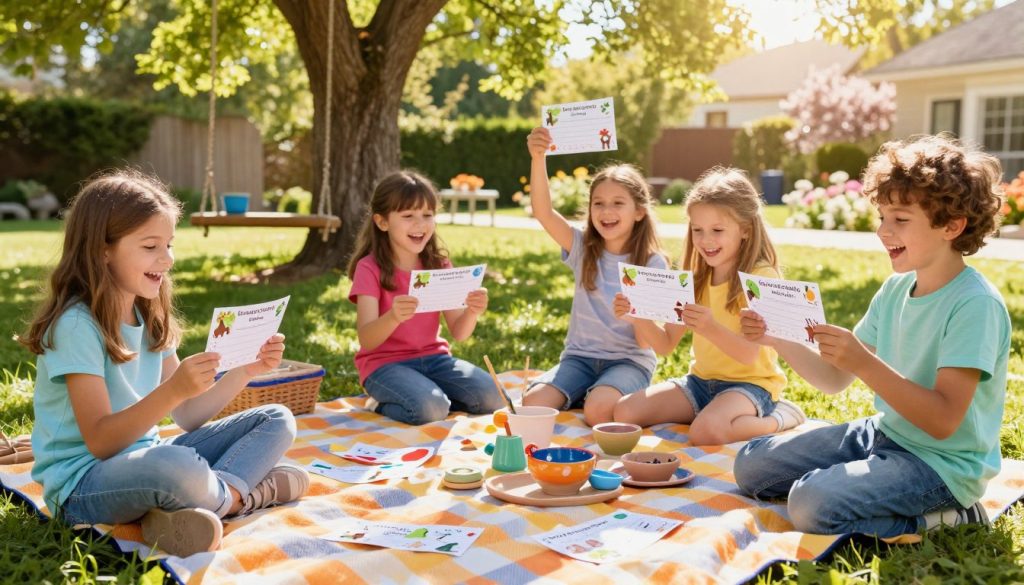
Make documentation fun. Collect ticket stubs, maps, and programs. Put them in a decorated envelope. Print photos and make a mini album. Add a scavenger-map page for the child to mark favorites.
Subscription boxes for kids offer ongoing surprises. Services like KiwiCo and Little Passports send projects based on age and interests. Add a handwritten note to make it feel custom.
Create membership gifts for repeat visits. A local zoo or children’s museum membership offers regular chances to build rituals. Each visit adds to a shared story.
When you can’t meet in person, choose safe, memorable options. Virtual classes for grandchildren let you cook, paint, or build together. Sign up for a live session and follow the same steps: print the recipe, frame the drawing, or save a screenshot.
Outdoor adventures are low risk and high reward. Plan short hikes, beach days, or backyard camping. Bring a small kit with a journal and a disposable camera or a simple map. You’ll create memories and a physical record.
Here are quick ideas to start:
- Keep a scrapbook of tickets, labels, and photos from one special outing.
- Give a subscription box with a note about a future shared project.
- Book a virtual class and mail a small craft kit ahead of time.
- Design a DIY scavenger map for a local park or botanical garden trip.
These approaches blend tangible keepsakes with thoughtful shared time. Use simple, repeatable rituals to make your ideas traditions they’ll look forward to and remember.
Practical ways grandparents can create lasting memories with grandkids
You can make small gestures a big part of your days with your grandkids. These gestures help deepen your bond and leave a lasting impact on your family. Simple routines and activities make bonding fun and meaningful.
Gift ideas and traditions to strengthen grandparents and grandchildren relationship
Start simple traditions that you can do every year. Give “Your Day” coupons, keep a special tote for sleepovers, or mark birthdays with a framed photo. Experience-based gifts like museum memberships or cooking lessons are great too.
Choose gifts that are repeated to make visits feel special. Use items with stories, like a favorite recipe card or a handmade ornament, to keep traditions alive.
Screen free activities for grandkids that build emotional connection
Choose activities that encourage talking and teamwork. Bake cookies, plant a garden, or build a fort for stories. Crafts like wood projects or painting rocks help you focus and share pride.
Start projects that last over time. A gardening plot or a craft box subscription keeps memories growing. These activities create calm moments for listening and learning.
Legacy building through storytelling and family traditions across generations
Share family stories through reading or photo books. Record audio stories to capture voices and memories. This way, you pass down family history and create a sense of connection.
Involve kids in making tradition artifacts. Let them write recipes, decorate ornaments, or label albums. This strengthens their identity and helps build a lasting legacy.
| Idea | How to do it | Benefit |
|---|---|---|
| “Your Day” coupon | Create a small booklet of activity coupons redeemable any visit | Promotes choice, builds excitement, supports bonding with grandkids |
| Family recipe lesson | Cook one dish together and write the recipe on a card with notes | Teaches skills, preserves traditions with grandchildren |
| Multi-session garden | Plant seeds in spring, tend plants through summer, harvest in fall | Teaches responsibility, offers ongoing screen free activities for grandkids |
| Photo and story album | Collect photos, add brief captions and voice recordings | Supports memory, aids legacy building with grandchildren |
| Annual outing tradition | Pick a yearly event like a theater matinee or zoo visit | Creates shared experiences, encourages anticipation and continuity |
How to teach life skills and confidence through personalized gifts
Thoughtful, personalized gifts can make playtime educational. A small gift can teach a lot when you add clear steps and share moments. This way, you teach life skills while keeping it fun.
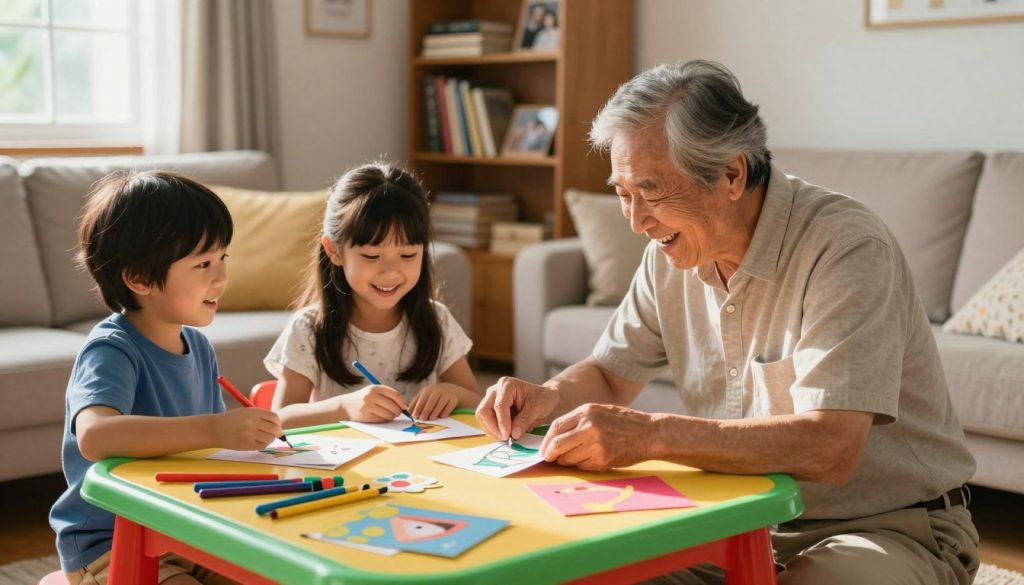
Learning through play with grandchildren using craft kits and cooking tools
Choose kits and tools that fit your grandchild’s age. Kits that need measuring and mixing improve motor skills. Monthly subscriptions offer steady practice.
Make a gift special by cooking a family recipe together. Then, put the recipe in a personalized binder. This keeps a family tradition alive and supports learning.
Using gifts to encourage patience and creativity for kids
Choose projects with many steps, like gardening kits or model sets. These teach patience and planning. You can guide and encourage them as they work.
Give open-ended art supplies and dress-up clothes to spark imagination. These items encourage creativity and patience by rewarding the process, not just the end result.
Practical gifts that teach responsibility and build self-esteem
Give gifts that match tasks for your child’s age. For example, gardening tools or a pet-care kit teach responsibility. Completing tasks boosts their confidence and pride.
Personalized items like embroidered aprons or a kid-size watch help with independence. These gifts support raising confident children through play as they learn to care for their belongings.
Below is a quick guide to match gifts with skills and how grandparents can help.
| Gift Type | Core Skill Taught | How a Grandparent Can Help |
|---|---|---|
| Child-safe baking set | Measuring, following steps, patience | Cook a recipe together, add it to a family binder |
| Monthly STEM kit | Problem-solving, sequencing, fine motor skills | Work through one lesson each week and celebrate progress |
| Gardening starter kit | Responsibility, planning, delayed gratification | Help plant seeds, set a watering schedule, track growth |
| Open-ended art kit | Creativity, self-expression, focus | Create a display area for finished pieces and rotate shows |
| Personalized tool box or apron | Autonomy, pride in ownership, practical skills | Assign small chores that use the item and praise effort |
Keeping gifts meaningful without adding clutter
Heartfelt giving can mean a clutter-free home and lasting memories. Choose a few items that encourage play, not clutter. This way, you focus on the moment and the meaning, not just the number of gifts.
Why fewer, better toys lead to more creative play
Studies show kids with fewer toys play more creatively. Items like wooden blocks, art supplies, and simple costumes spark long, imaginative play. Try a “one in, one out” rule to keep playtime fresh and meaningful.
Choosing durable, multipurpose, and memory-rich items
Opt for items that last. Think about heirloom blankets, solid wood puzzles, or sturdy aprons for cooking together. These gifts serve as both play tools and keepsakes. They reduce waste and grow in value over time.
Combining a small tangible with an experience or photo keepsake
Match a small gift with a special outing or a photo. A framed photo, a ticket, or a personalized mug can capture a memory. Add a journal page to record the day, making the gift a part of your routine.
By valuing quality over quantity, you give clutter-free gifts that truly matter. You end up with fewer items and more stories to share.
Conclusion
Match the gift to your grandchild’s stage to make bonding feel natural. For preschoolers, choose keepsakes like a name blanket or a custom storybook. These gifts are tangible and personal, perfect for bedtime.
For older kids, give experience-based gifts like classes or outings. These allow for independence while creating memories. Always pair experiences with a physical reminder for younger ones. A ticket stub or a small photo album makes any outing special.
Choose durable, multipurpose gifts that last. These reduce clutter and encourage creative play. Simple traditions and activities that repeat each year are great for bonding.
Use subscription boxes or memberships for ongoing touchpoints. Hands-on projects like cooking kits or gardening tools teach life skills. These practical steps create joyful and meaningful moments.
Personalization, durability, and shared time strengthen bonds. Thoughtful choices turn gifts into rituals that spark joy. These rituals build lasting memories with grandkids for years.
FAQ
Why do children respond so strongly to gifts made just for them?
What makes personalized gifts special for children?
How do personalized items create an emotional connection and sense of belonging?
How do tangible reminders extend the pleasure of an experience?
Why do memories form differently for young children?
How does developmental stage shape gift preferences?
Why do preschoolers prefer material keepsakes?
How and why do older children shift toward experiences?
How can photos and mementos bridge experiential gifts for younger kids?
How do I choose age-appropriate keepsakes that stay meaningful?
What are reliable ideas for personalized books, blankets, photo mugs, and custom toys?
How do I balance uniqueness with simplicity to encourage play and imagination?
How can I turn outings into keepsakes like tickets, photo albums, or scavenger maps?
What subscription boxes or memberships feel personalized and encourage ongoing bonding?
What are safe and memorable experiential gifts during restricted times?
What practical ways can grandparents create lasting memories with grandkids?
Which screen-free activities build emotional connection and calm interaction?
How can storytelling and family traditions serve as legacy building?
How can gifts teach life skills and build confidence through play?
Which gifts encourage patience and creativity for kids?
Why do fewer, better toys lead to more creative play?
How do I choose durable, multipurpose, and memory-rich items?
How do I combine a small tangible with an experience to make memories stick?
What’s the simplest rule to follow when choosing gifts to maximize lasting joy?
This post contains affiliate links. If you click on a link and make a purchase, I may earn a small commission — at no extra cost to you. Thank you for supporting this blog and helping me keep the patterns free! Read the full Affiliate Disclosure & Transparency.