
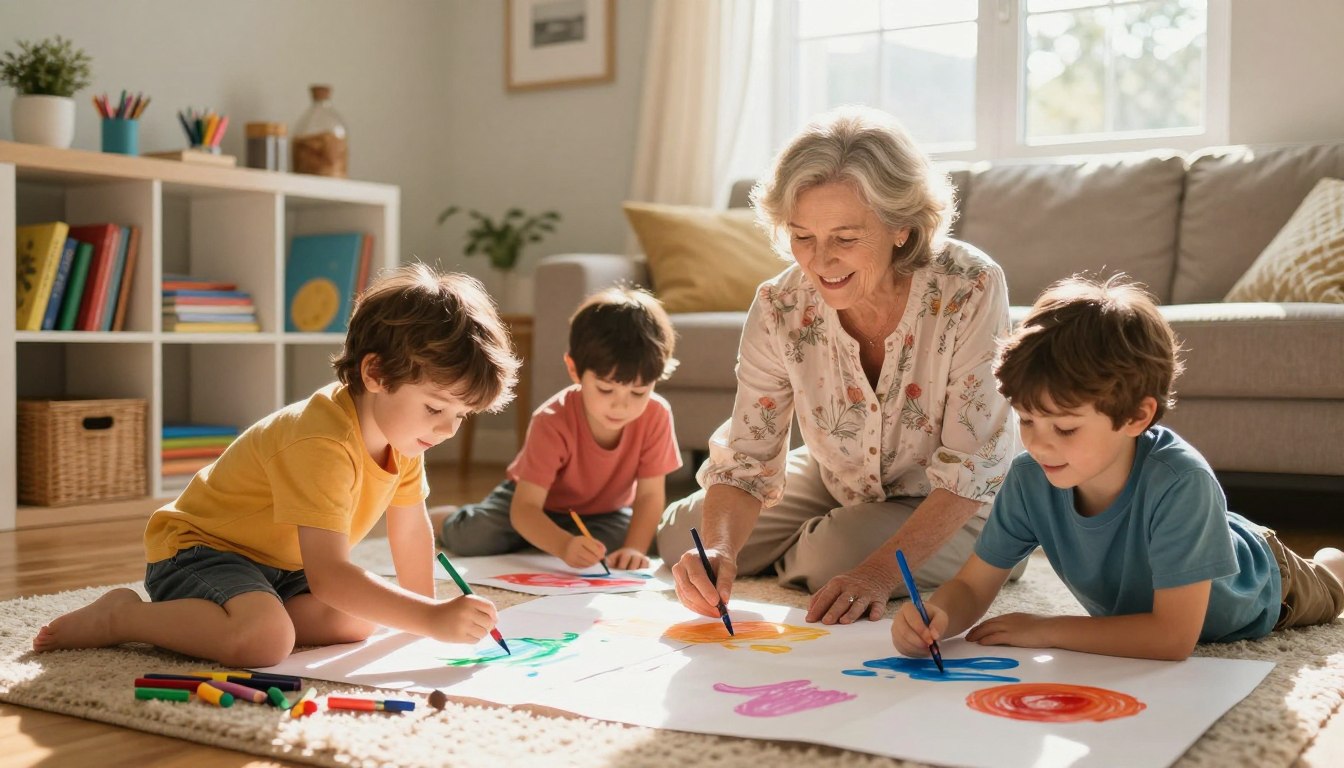
As a grandparent, you have a special chance to spark your grandkids’ imagination. You might have more time and a clearer view of what’s important. This calm helps you focus on connecting with your grandkids, not just keeping up with schedules.
Learning together is a great way to encourage creativity. You can share family recipes, teach gardening, or show them how to sew. These activities help your grandkids feel confident and connected to their family.
Creating memories with your grandkids is key to their identity. Whether it’s laughing in the kitchen, exploring the yard, or making a gift, these moments are precious. They strengthen your bond and make time together truly special.
Key Takeaways
- You bring time and perspective that encourage play and curiosity.
- Sharing skills like cooking and gardening supports intergenerational learning.
- Simple, screen-free activities create strong bonds with grandkids.
- Purposeful moments help shape values and a child’s sense of belonging.
- Choose spending time with grandkids ideas that prioritize fun and connection.
Why Grandparents Are Ideal Creativity Mentors
You bring a calm, seasoned eye to playtime that few others can match. Years of life experience let you spot teachable moments in everyday events. This unique perspective helps children see the world with curiosity instead of pressure. It supports a strong grandparents and grandchildren relationship built on trust and gentle guidance.
The unique perspective and life experience you bring
Your skills and priorities have been refined over decades. You can slow down a hurried day and turn small moments into lessons. Sharing a recipe, mending a sweater, or naming plants in the garden passes on practical knowledge and sparks imagination. These acts become part of legacy building with grandchildren while teaching problem solving and resilience.
Emotional availability and patient attention
You often have fewer daily demands than parents. That freed-up time makes steady, patient attention possible. Listening to a child’s questions without rushing builds confidence. This emotional connection with grandchildren fosters risk-taking in creative play and helps interests grow into real abilities.
Intergenerational learning and legacy building
Intergenerational bonding activities formalize how skills travel across generations. Hands-on projects such as gardening, baking, or craftwork pass on family stories and useful techniques. Those rituals strengthen identity and give grandchildren a living link to family history. They help with legacy building with grandchildren while deepening the grandparents and grandchildren relationship.
| Strength | Example Activity | Benefit to Child |
|---|---|---|
| Experience | Cooking family recipes together | Practical skills and cultural knowledge |
| Time and patience | Reading and storytelling sessions | Language growth and emotional security |
| Hands-on skill transfer | Gardening and simple repairs | Problem solving and self-reliance |
| Ritual creation | Seasonal traditions and crafts | Sense of belonging and lasting memories |
Practical Screen-Free Activities for Grandkids
Turn afternoons into fun learning moments with simple, screen-free activities for grandkids. These activities help build skills, spark curiosity, and strengthen your bond. Choose activities that fit your grandchild’s age and attention span for the best results.
Arts and crafts that build skills and imagination
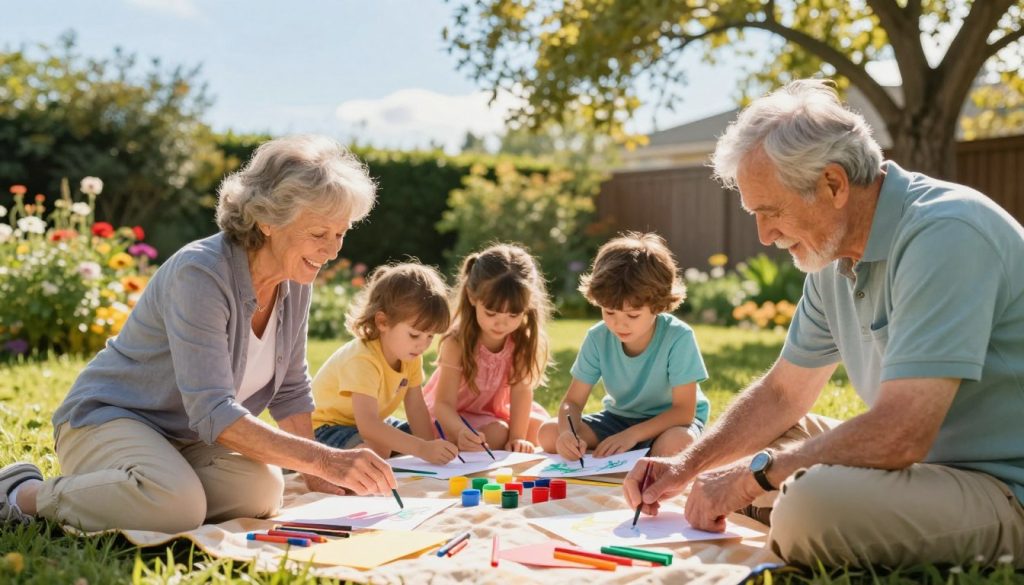
Teach knitting, crocheting, or simple sewing projects like a pillowcase or a stuffed toy. These activities grow fine motor skills and patience. Start with large needles and color-coded yarn for beginners.
As you work, talk about color theory, pattern making, and artists like Georgia O’Keeffe or Henri Matisse. This adds depth to their learning.
Do short sessions that focus on a single technique. Try a collage that uses magazine cutouts and paint swatches. Discuss texture and contrast as you work. These activities encourage expression and build confidence.
Hands-on projects that teach problem solving
Build simple birdhouses or a small shelf together. This teaches measuring, sanding, and basic joinery. Use child-safe tools and clear steps for safety and learning.
Repairing a torn jacket or patching jeans teaches resourcefulness and sustainability. These activities are practical and educational.
Introduce board and card games like Chess, Checkers, Scrabble, or Gin Rummy. These games develop strategy, numeracy, and fair play. They make learning fun and instructive.
Calm and mindful creative activities
Offer mindfulness activities for children like short guided breathing, kid-friendly yoga poses, or five-minute seated quiet time. These help with emotional regulation. Pair these with journaling prompts or drawing exercises for deeper reflection.
Turn scrapbooking, simple photography projects, or sensory-based storytelling into calm activities. Use textured papers, fabric swatches, and found natural objects. These activities build attention and memory in a relaxed setting.
| Activity Type | Example | Skills Built | Time |
|---|---|---|---|
| Textile Crafts | Knitting a scarf, sewing a small toy | Fine motor, pattern recognition, patience | 30–60 minutes |
| Wood Projects | Birdhouse, small shelf | Measuring, problem solving, tool safety | 1–2 hours |
| Clothing Repair | Patching jeans, sewing buttons | Sustainability, practicality, resilience | 20–45 minutes |
| Board & Card Games | Chess, Scrabble, Gin Rummy | Strategy, numeracy, turn-taking | 20–60 minutes |
| Mindful Practice | Breathing, kid yoga, journaling | Focus, emotion regulation, self-awareness | 5–20 minutes |
| Quiet Crafts | Scrapbooking, photography projects | Attention to detail, memory, creativity | 30–90 minutes |
Turning Everyday Moments into Creative Lessons
You can make simple days into learning adventures. Use daily routines to teach important skills. This makes learning fun and easy for both of you.
Cooking and baking as a laboratory for creativity
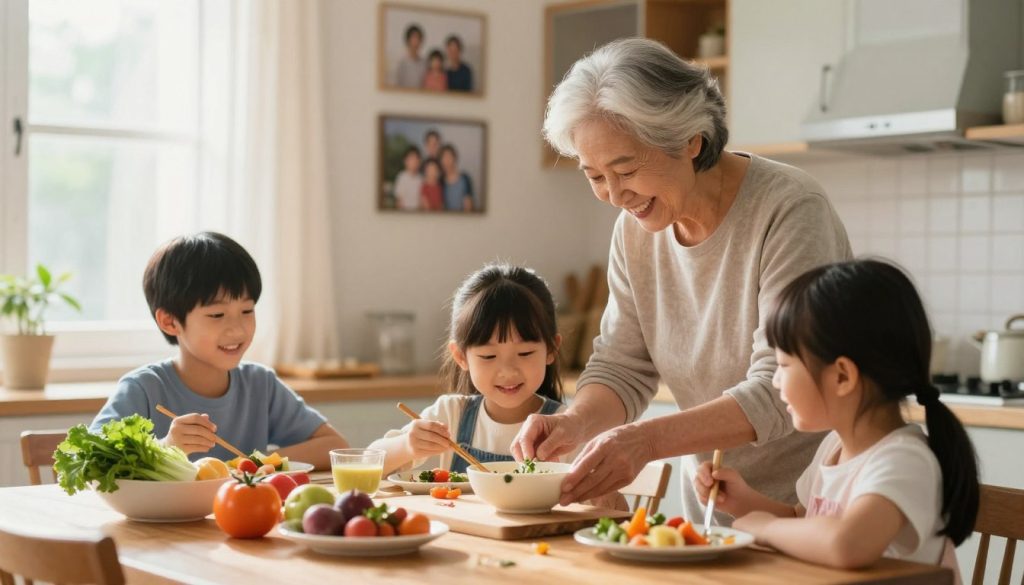
Cooking with grandkids turns every recipe into a science lesson. Measuring cups teach fractions. Doubling a recipe shows ratios.
Reading labels starts conversations about nutrition and food choices. Choose simple recipes like chocolate chip cookies or lasagna. Let kids stir, pour, and count.
Canning fruits or making jam teaches patience and preservation. As you mix and bake, share family memories. This weaves traditions across generations.
Gardening and outdoor exploration
Gardening with grandchildren turns a patch of dirt into a classroom. Plant herbs, tomatoes, or a butterfly garden. Track growth and pollinators.
Composting teaches about cycles and caring for the environment. Plan short outdoor trips like nature walks, fishing, or camping. Use a map to find a trailhead.
These activities teach navigation, survival basics, and observational skills. They connect kids to the natural world.
Storytelling and family history
Storytelling for grandkids builds language, memory, and identity. Read picture books together and act out scenes. Use voices and props.
Help grandchildren write and illustrate their own tales. This boosts confidence. Create a simple family tree using photos and old letters.
Researching ancestors in local archives or talking about relatives strengthens a sense of belonging. Use sensory details and sound effects to make stories memorable. This keeps young listeners engaged.
| Activity | Skills Taught | Suggested Project |
|---|---|---|
| Cooking with grandkids | Math, reading, nutrition, cultural history | Bake cookies, double a recipe, make lasagna, can jam |
| Gardening with grandchildren | Biology, responsibility, patience, ecology | Plant herbs, build a butterfly garden, start compost |
| Storytelling for grandkids | Language, creativity, family identity, research | Create a family tree, write illustrated stories, archive photos |
| Combined family traditions across generations | Continuity, values, shared rituals, memory | Cook a holiday meal together, garden heirloom seeds, record oral histories |
Teaching Life Skills Creatively to Strengthen Bonds
You can make everyday tasks fun and educational. Try simple challenges to teach handy skills. Add rhythm and movement to learning, and include money basics and community service in projects. These moments make learning fun and strengthen your bond.
Practical handy skills taught as creative challenges
Begin with small projects for quick, satisfying results. Build a birdhouse or a simple shelf together. Let your grandchild hold a pencil while you measure, then let them sand and paint. This builds pride.
Teach safety before tackling a light fixture or basic plumbing. Use step-by-step checklists and make each step a mini game. You’ll teach tool use, problem-solving, and independence while guiding them.
Show basic clothing repair like sewing on a button or patching jeans. Turn it into a design challenge: choose thread, stitch patterns, and celebrate the finished piece. These tasks teach patience, fine motor skills, and resourcefulness.
Music, dance, and play-based learning
Introduce rhythm with simple instruments. A small keyboard, a ukulele, or a tambourine are great starters. Play call-and-response songs that boost memory and listening skills.
Dance together to different styles, from waltz basics to modern pop steps. Make movement a story so your grandchild practices coordination while expressing emotions. These playful sessions support raising confident children through play.
Create short play-based lessons that blend song, movement, and storytelling. Use music for grandkids to teach counting, colors, or letters. You will see creativity and language skills grow when lessons feel like play.
Financial literacy and volunteerism as creative lessons
Use clear, hands-on tools to teach money. Try three jars labeled save, spend, give. Set a small goal for a toy or experience and track progress together. This method makes financial literacy for grandchildren feel tangible.
Design a family budget project for a weekend treat. Let your grandchild research prices, compare options, and help decide. You will teach planning, math, and goal-setting through a real task.
Volunteer together at a food bank, animal shelter, or neighborhood clean-up. Frame each outing as a mission with roles and creative problem-solving. Volunteerism with grandchildren builds empathy, teamwork, and the joy of contributing.
| Activity | Skills Taught | How to Make It Creative |
|---|---|---|
| Birdhouse or shelf build | Measuring, tool safety, planning | Design contest for paint and shape; storytelling about the home’s bird family |
| Light fixture or plumbing demo | Safety awareness, basic wiring/plumbing, sequencing | Step-by-step scavenger hunt for tools and parts; reward chart for each safe step |
| Sewing and clothing repair | Fine motor skills, attention to detail, self-reliance | Patch design studio with fabric choices and a mini fashion show |
| Instrument play and dance | Memory, coordination, emotional expression | Rhythm games, choreograph a short routine, mix in storytelling beats |
| Savings jars and family budget | Goal-setting, basic math, delayed gratification | Create goal charts, sticker milestones, and a “store” for choices |
| Community volunteering | Empathy, civic responsibility, teamwork | Mission badges, photo journal of impact, post-event reflection and craft |
Building Lasting Traditions and Emotional Connection
You can create rituals that spark imagination and deepen the emotional connection with grandchildren. Start with small habits like Saturday storytelling, seasonal baking, or a spring planting project. Make each ritual personal by reflecting a grandchild’s interest, inviting them to play.
Creating rituals that encourage imagination
Set a rhythm that children can count on. Weekly story nights with props, themed craft afternoons, or a holiday recipe passed down from family traditions across generations become anchors. These anchors turn into cherished memories with grandkids, giving them a safe space to try new ideas.
Slow down and savor ordinary moments
Model curiosity when you walk in a park, stir a pot, or watch snow fall. Let your grandchild linger, touch, and ask questions. Unstructured time helps imagination blossom and builds emotional connection with grandchildren through shared wonder and quiet attention.
Encouraging persistence, patience, and confidence
Use repeating projects to teach steady effort. Gardening cycles, knitting rows, or building a birdhouse show progress over time. Praise trying, not just perfect results. Framing mistakes as steps toward skill grows patience and creativity for kids and builds lasting confidence.
Keep a simple record of rituals and highlights. A notebook or jar of notes turns small acts into a visible legacy of family traditions across generations. Those records spark fresh memories with grandkids and remind you both how much those shared moments matter.
Conclusion
Your love and attention are key to helping a grandchild grow. By letting them play freely and following their interests, you boost their confidence. This approach makes bonding with grandkids both natural and rewarding.
Try activities like cooking, gardening, and storytelling to bond and teach life lessons. These activities make learning fun and meaningful. They help you share your knowledge and family stories in a playful way.
Create rituals and memories that match your grandchild’s personality. Activities like interactive storytelling and hands-on projects are great. They help build a lasting legacy and shape their curiosity and character.
FAQ
How can I encourage creativity in my young grandchildren without pressuring them?
Why are grandparents particularly well suited to be creativity mentors?
How can I use my life experience to teach grandchildren valuable skills?
What screen-free arts and crafts work best for different ages?
What hands-on projects teach problem solving and confidence?
How do I create calm, mindful creative sessions with my grandchildren?
How can cooking and baking become lessons in creativity and life skills?
What outdoor activities nurture curiosity and environmental stewardship?
How do I use storytelling and family history to deepen connection?
How can handy skills be taught as creative challenges without being unsafe?
How do music and dance support creative development?
Can I teach financial literacy and civic values through creative activities?
How do I create rituals and traditions that stick with grandchildren?
How can I encourage persistence and patience in grandchildren through creative work?
What if my grandchild loses interest quickly—how do I keep activities engaging?
How do these intergenerational activities benefit both of us emotionally?
This post contains affiliate links. If you click on a link and make a purchase, I may earn a small commission — at no extra cost to you. Thank you for supporting this blog and helping me keep the patterns free! Read the full Affiliate Disclosure & Transparency.