
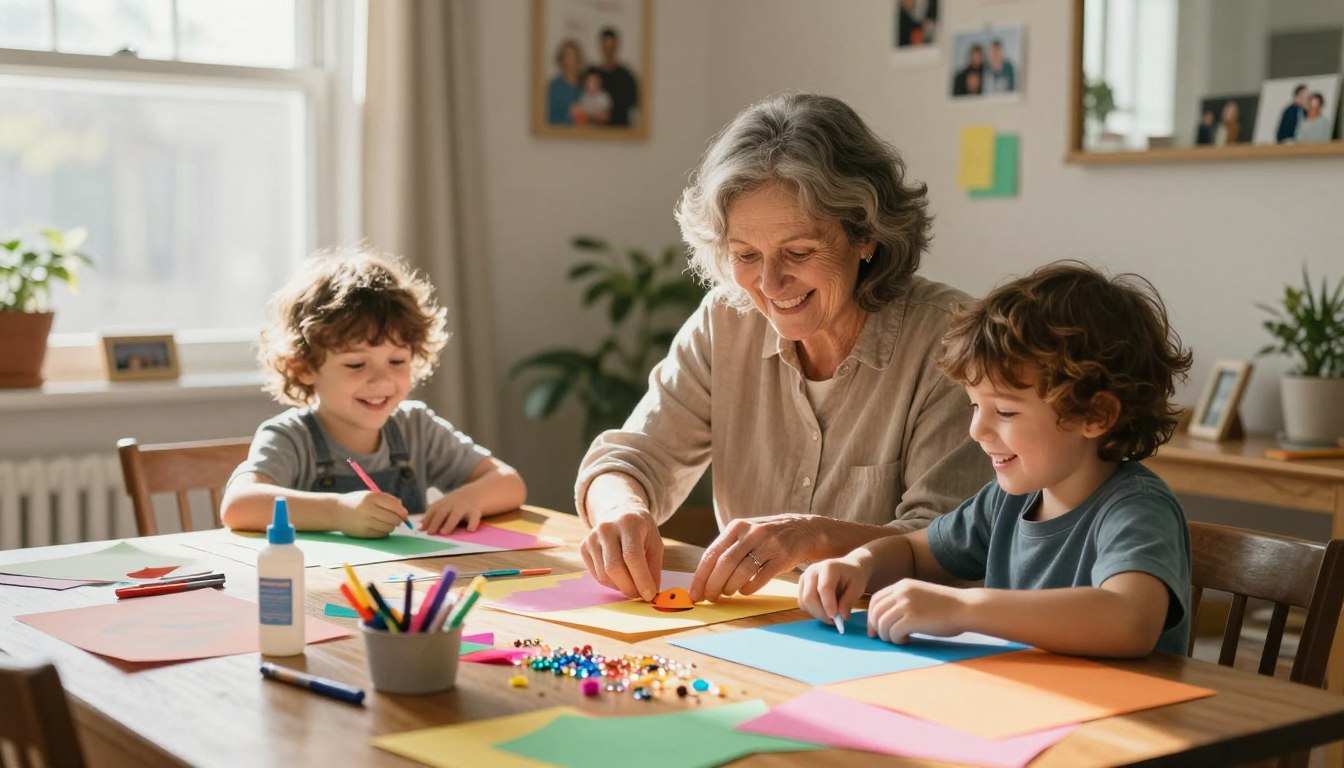
You can make small craft moments into lasting family traditions. Projects like painted handprint canvases or a yearly time capsule mark important times. Websites like Family Tree Magazine and MaryJanesAndGaloshes show how to turn family-history crafts into seasonal rituals.
Planning crafts with purpose does more than fill time. It slows us down, starts conversations, and strengthens bonds with grandkids. DIY ideas like scrapbook pages, nature art, and upcycled keepsakes let everyone join in. This way, teens, toddlers, and grandparents all feel part of the fun.
These projects collect stories and dates, becoming a shared family history. Displaying a family recipe wall, a keepsake puzzle, or a gratitude garland creates lasting memories. It also sets traditions for younger family members to follow.
Key Takeaways
- Start small: choose repeatable crafts that suit mixed ages and skill levels.
- Use heritage ideas—family trees, recipe art, or time capsules—to tie projects to history.
- Prioritize low-cost, upcycled materials to keep traditions affordable and eco-friendly.
- Turn finished pieces into displays or rituals to reinforce bonding with grandkids.
- Consistent timing—seasonal or yearly—helps projects become true family traditions.
Why craft projects make powerful family traditions
Crafts offer a simple way to slow down and connect with family members of all ages. By planning activities for grandkids that repeat each year, you create moments filled with stories and laughter. These rituals help build a strong emotional bond with your grandchildren while teaching them valuable skills.
Emotional connection and intergenerational bonding
Working on a shared craft lets you focus on the present moment. You listen to your grandchild’s ideas, share memories, and celebrate the finished piece together. This attention strengthens your bond and makes your grandchild feel valued.
Choose projects that invite conversation. Memory jars, painted handprints, and family storybooks are great for sharing stories about relatives, childhood, and traditions. These conversations are key to intergenerational bonding.
Creating memories and legacy building with grandchildren
Repeatable crafts create keepsakes that mark time. A scrapbook or a yearly ornament becomes a timeline you and your family can revisit. Each item records growth, jokes, and milestones.
Use digital tools like shared photo albums or simple audio recordings to preserve stories. These additions make legacy building tangible and easy to pass to the next generation.
Teaching life skills through creative play
Crafts teach planning, patience, and problem solving. Baking a simple cookie recipe, making nature-inspired art, or upcycling a tin can shows children how to reuse materials responsibly. These lessons support resourcefulness and mindful consumption.
Design activities with clear steps so children of different ages can participate. This makes activities inclusive and boosts bonding with grandkids while teaching practical skills.
Planning craft traditions that fit your family and home
Start with small routines that build over time. Pick one weekly or monthly craft day. Treat it as quality time with your grandkids. Short projects make it easy to fit into busy schedules.
Choosing recurring projects that scale across ages
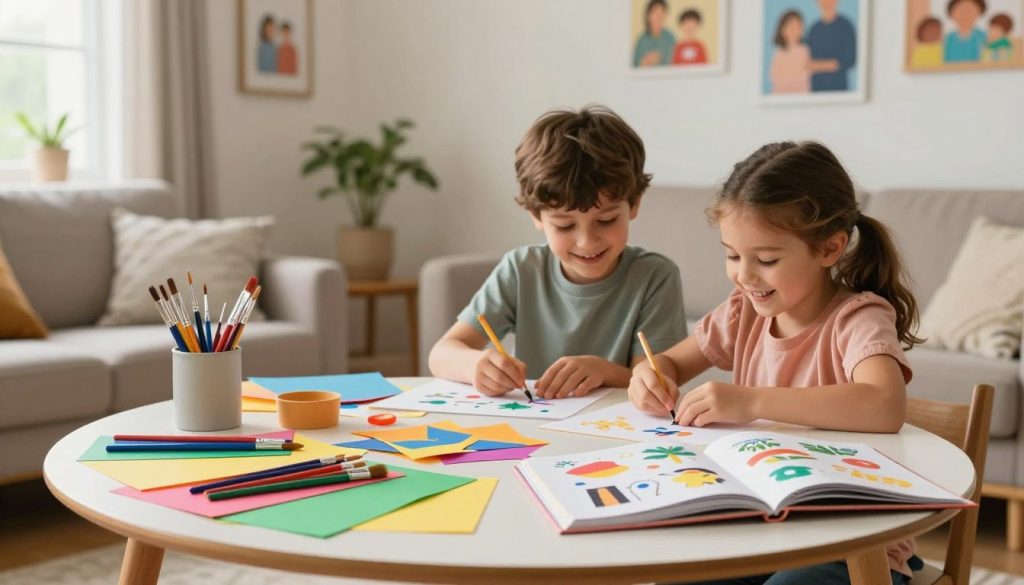
Choose projects that grow with your family. A handprint canvas works for toddlers, while older kids can add painted details each year. This turns a simple craft into a keepsake that records skill changes and memories.
Rotate formats so everyone contributes. Try a memory jar for weekly notes, then combine those notes into an annual scrapbook. These activities encourage participation from ages three to teens.
Scheduling rituals and seasonal timing
Anchor crafts to the calendar. Make leaf rubbings a fall tradition and stepping stones a spring activity for your garden. Seasonal timing gives you ready themes and keeps your ritual fresh.
Keep a shared calendar with clear dates and reminders. Short, predictable rituals help you deliver regular quality time with your grandkids without overwhelming your routine.
Materials, budget, and upcycling ideas
List materials before each session and favor reusable tools like washable paints and child-safe brushes. This saves time and reduces clutter. Use mason jars, cardboard, and old fabric to stretch supplies and teach resourcefulness.
Focus on budget-friendly crafts for grandkids by combining thrift-store finds with basic items from your pantry. Upcycling with grandkids turns recycling lessons into hands-on fun and makes every project feel meaningful.
| Project | Age Range | Time Needed | Materials | Tradition Tip |
|---|---|---|---|---|
| Handprint Canvas | 2–12 | 30–45 minutes | Canvas, washable paint, markers | Add each year and label with date for display |
| Memory Jar | 4–14 | 5–10 minutes weekly | Mason jar, paper slips, pens | Open annually and compile favorites into a book |
| Garden Stepping Stone | 5–15 | 1–2 hours | Cement mix, molds, found tiles or glass | Make one per season to mark growth and visits |
| Cardboard Playhouse | 3–10 | 1–3 sessions | Large boxes, paint, tape, fabric scraps | Refresh annually using upcycling with grandkids |
| Hand-Painted Mug | 6–18 | 30–60 minutes | Plain ceramic mug, paint pens, sealant | Create sets for tea time and label with names |
How to involve grandchildren and strengthen bonding with crafts
Craft time is a great way to bond with your grandkids. It turns simple projects into learning, calming, and memorable moments. Choose activities that fit your family’s ages and adjust the pace to match their energy.
Activities tailored for mixed-age groups
Find projects that grow with your family. Toddlers might enjoy painted handprint canvases or footprint stones. Teens can design puzzles or board games. Set up stations for young ones to do simple tasks while older kids handle the harder parts.
Encouraging storytelling and sharing family history
Use crafts to spark stories. Make a family tree with photos and stories. Create a trivia game or scrapbook page for each relative. Ask questions like “Who remembers when…” or “What was Nana’s favorite recipe?”
Turning a craft into a repeatable ritual
Make crafts a regular part of your routine. Try weekly memory jar updates or a yearly time capsule. Designate a spot for finished projects so they stay visible. Naming and dating each piece adds meaning and invites grandkids back.
Balance active and calm activities for your grandkids. Cooking, nature collages, and handprint art are great for sensory play. Have short, frequent sessions to keep projects fun and manageable. Over time, these activities build trust, joy, and a shared family history.
Project ideas that become traditions: practical how-to and display tips
Make crafts into family traditions by picking projects that are easy to do again. Choose ones that are simple to show off and tell stories about. Start by planning where to display the crafts, how to label them, and who will help.
Simple keepsakes and display methods
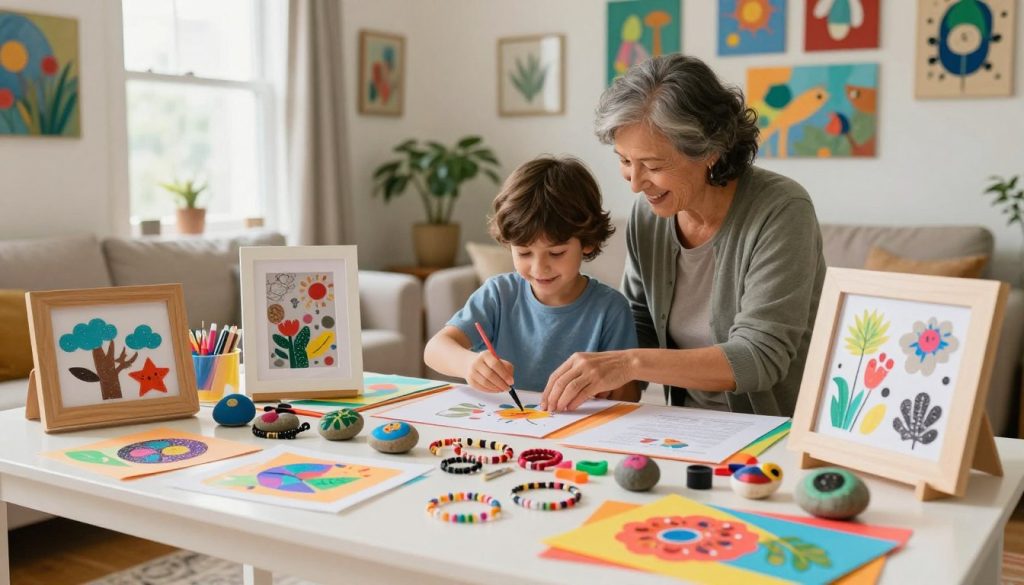
Frame handprint canvases and hang them in a hallway. Make memory jars to open each year. Use a labeled box for pottery, puzzle pieces, and small artworks.
Build a family recipe wall art using handwritten cards. Place footprint stepping stones in your garden. Use scrapbooks that you can scan later for cloud backup.
Family activities that teach and entertain
Try a new project each season: spring pots, summer murals, fall books, and winter ornaments. These projects teach science, art, or history while adding to family traditions.
Host a craft-and-story afternoon. Each grandchild makes something and tells a story about it. Turn handprint crafts into a timeline to show growth and start conversations about family history.
Digital and hybrid traditions
Document projects with photos and videos. Then, make a shared photo book or a family podcast episode. Combine scanned scrapbook pages with cloud storage for digital traditions.
Use QR-coded frames and digital scrapbooking folders. These ideas keep your projects current and easy to revisit.
Below is a quick guide to match project type with display and storage. This helps you choose options that fit your home and budget.
| Project | Display Idea | Storage / Backup |
|---|---|---|
| Handprint canvas | Hallway framed gallery | Photo scan, cloud album |
| Memory jar notes | Mantel cluster, yearly reveal | Label jars by year, digital transcript |
| Stepping stones | Garden path with engraved dates | Record photo map, GPS-tagged images |
| Family recipe art | Kitchen wall or framed recipe collage | Scan for digital cookbook, cloud storage |
| Personalized puzzles | Frame finished image or keep in labeled box | Photo of assembled puzzle, storage box with name |
Focus on play, memory, and simplicity. When crafts are easy to repeat and backed up, they become lasting keepsakes for grandchildren. They also help grow family traditions across generations.
Overcoming common challenges and keeping traditions alive
You want family crafts to stick, not feel like another chore. Start small and build habits that fit your week. Use weekend-friendly projects, printable prompts, and timed checklists so craft time is predictable and light on prep.
Managing time, energy, and differing skill levels
Break projects into short steps so you can finish pieces across days. Cut shapes, sort supplies, or pre-mix materials when you have energy. This lets you focus on the fun parts with children and saves your stamina.
Choose projects that scale. Toddlers can press handprints, school-age kids add drawings, teens write captions or assemble pages. This approach keeps everyone engaged and makes managing crafts with grandkids simpler.
Use digital tools like Evernote or shared photo albums to keep instructions, templates, and photos in one place. These tools reduce clutter and help you plan quick sessions from the couch.
Preserving and organizing keepsakes
Store fragile pieces in acid-free sleeves and label each item with a date and short note. Scan or photograph delicate items so you have a backup if something fades or breaks.
Create a single keepsake box or book box for each child. A labeled container makes it easy to find cherished items and supports preserving keepsakes for grandchildren without endless searching.
For outdoor or upcycled pieces, apply a sealant to protect against weather. Treat stepping stones and painted rocks before display to extend their life and reduce future repairs.
Passing traditions forward to younger generations
Document steps and stories. Record short audio notes, write prompts, or make a simple guide so kids can learn the ritual when they are older. Clear instructions increase the chance of passing traditions to grandchildren.
Invite younger family members to help as assistants early on. Giving them responsibility builds confidence and encourages patience and creativity for kids as they grow.
Keep a digital archive with photos and instructions. A backup lets a moving family or busy schedule interrupt tradition without ending it. Rotate projects each year to refresh interest and protect the ritual from burnout.
Conclusion
You can make simple craft projects into lasting family traditions with a bit of planning. Try mix-and-match ideas like memory jars, handprint canvases, or time capsules. These can be repeated and changed as your grandkids grow.
Family Tree Magazine shows how both quick activities and detailed family-history books can become ongoing practices. These practices help strengthen your family’s identity and keep stories alive for your grandkids.
Keep your projects affordable by upcycling materials or using nature finds. MaryJanesAndGaloshes suggests dating, labeling, and displaying small, heart-centered pieces. This makes spending time with grandkids feel natural and joyful.
Document your finished work with photos, scans, or sealed boxes. This way, the legacy you build with your grandchildren is clear and lasting. Set a simple schedule for these activities, like monthly or seasonal, and involve your kids often. This helps build their skills and confidence.
Raising confident children through play is achieved when creative tasks are repeated, praised, and passed down. This turns ordinary moments into meaningful family traditions with your grandkids.
FAQ
How can simple craft projects turn into lasting family traditions?
What kinds of craft activities best build emotional connection and intergenerational bonding?
How do I teach life skills through crafts without turning it into a lesson?
How do I choose projects that work for different ages in one session?
How often should we schedule craft rituals so they stick but don’t feel like extra work?
What are affordable materials and upcycling ideas for grandkid-friendly crafts?
Can genealogy and family-history projects engage tech-savvy grandchildren?
What are quick craft ideas that still feel meaningful for busy grandparents?
How can crafting together help build grandchildren’s confidence and creativity?
How do I preserve and organize keepsakes so they survive moves and time?
What display tips make handmade keepsakes feel like part of the home’s story?
How can I adapt projects for grandchildren with limited attention spans or sensory sensitivities?
How do I pass a craft tradition forward so grandchildren continue it as they grow?
What are good ways to combine cooking or outdoor activities with craft traditions?
How do I keep traditions fresh so they don’t become repetitive or stale?
This post contains affiliate links. If you click on a link and make a purchase, I may earn a small commission — at no extra cost to you. Thank you for supporting this blog and helping me keep the patterns free! Read the full Affiliate Disclosure & Transparency.