
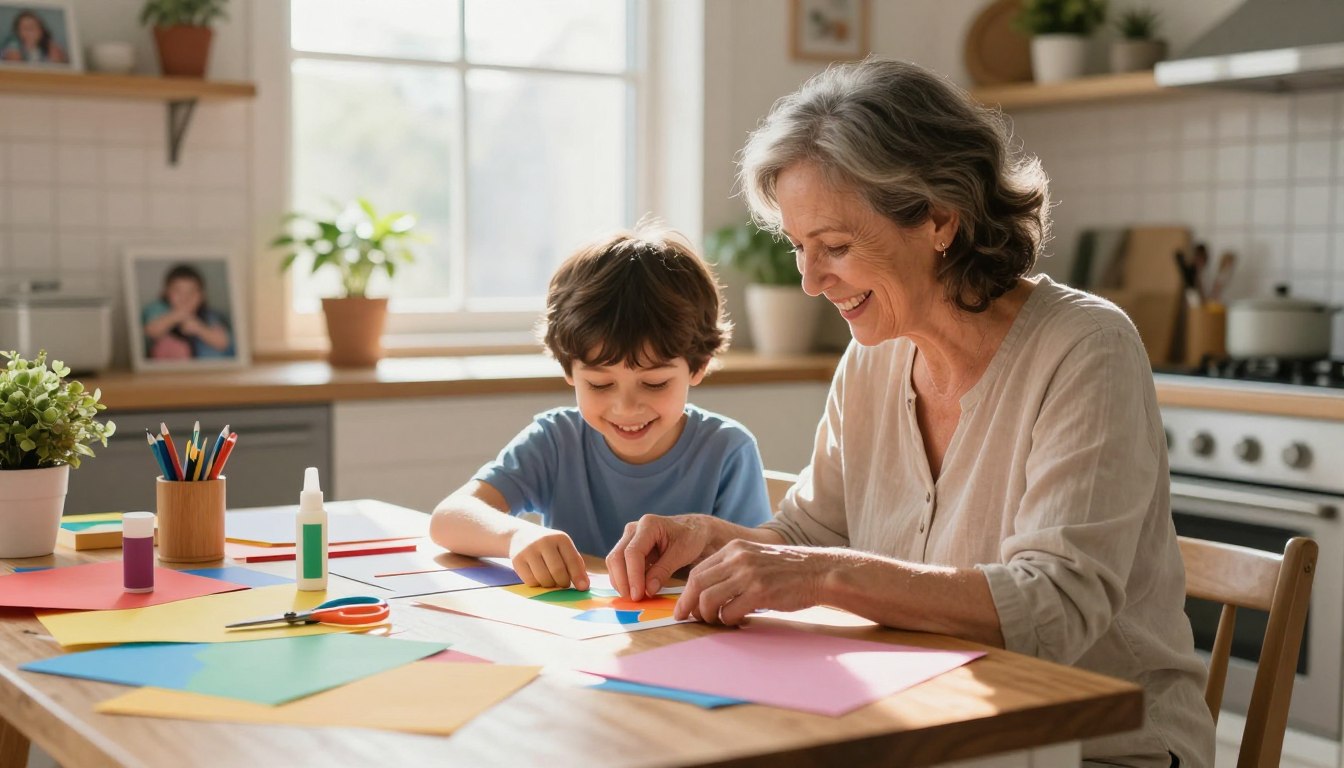
Crafting together is a simple way to reconnect with your grandkids. It’s a break from screens and busy lives. Making a card, sewing, or folding origami shares skills and stories, deepening your bond.
These activities offer calm, focused moments. They replace passive screen time with active play. As you work together, you create memories and teach patience, fine motor skills, and creativity.
For you, crafting can renew purpose and bring energy. For them, it means getting your full attention. The finished pieces, like ornaments or quilts, become memory anchors and family traditions.
Key Takeaways
- Crafting boosts bonding with grandkids through shared, hands-on activities.
- Projects teach useful skills and pass on family values.
- Hands-on crafts reduce screen time and invite real conversation.
- Time spent crafting counts as meaningful quality time with grandchildren.
- Finished keepsakes help preserve memories and strengthen family traditions.
Why crafts matter for grandparents and grandkids
Crafting together is a great way to build trust and joy with your grandchild. It creates a space for laughter, stories, and gentle guidance. These moments help form a strong bond and reduce screen time.
Emotional connection and reduced screen time
Choosing screen-free activities means giving your grandchild your full attention. Simple crafts teach patience and listening while your grandchild shares ideas. This focused time strengthens your bond and creates lasting memories.
Mental and developmental benefits across generations
Crafts improve fine motor skills, early math, and sequencing. They teach counting and order in a fun way. Seniors also get mental engagement and a sense of purpose. Both generations learn problem-solving and creativity from these activities.
Crafts as a bridge between generations
While doing crafts, stories come more easily. You can share family recipes, songs, or holiday memories. Grandchildren often share what matters to them today. This exchange builds respect and curiosity across ages.
| Benefit | What it teaches | How it helps relationships |
|---|---|---|
| Fine motor development | Cutting, folding, painting | Shared focus builds confidence and pride |
| Early math and sequencing | Measuring, step-by-step projects | Coaching moments boost self-esteem and trust |
| Emotional skills | Waiting turns, expressing ideas | Creates a safe space for honest talk |
| Mental engagement for grandparents | Planning projects, storytelling | Reduces isolation and sparks purpose |
| Long-term family memory | Keepsakes and shared techniques | Forms traditions and lasting bonds |
Use these activities to raise confident children through play. Choose projects that match their ages and interests. Treat each session as a chance to bond across generations. Small, consistent efforts lead to steady growth in skills and closeness.
Simple, high-impact craft projects you can start today
Crafting with your grandchild is a great way to bring joy and create lasting memories. Pick projects that fit your space and the child’s age. These ideas need basic supplies and encourage conversation, creativity, and learning during quality time.
Homemade greeting cards and craft-stick frames
Start with paper, markers, stickers, craft sticks, glue, and family photos. Teach your grandchild to fold cards, write notes, and decorate with simple drawings. Making frames from craft sticks turns a small photo into a heartfelt gift.
These projects are perfect for screen-free activities. Younger kids practice fine motor skills, while older kids work on handwriting and thoughtful messages. You’ll have keepsakes that make birthdays and holidays special.
Handprint art and keepsakes
Use non-toxic acrylic or washable paints for handprints or footprints on canvas or cardstock. Create an “Our Hands Together” piece with names and the date. This canvas shows growth over years and becomes a home centerpiece.
Handprint art captures a moment in time and records memories with grandkids. It supports sensory play and offers a calm, memorable ritual to repeat as children grow.
Painted rocks and nature finds
Take a short walk to collect smooth stones, leaves, or pinecones. Wash and dry the stones, then paint patterns, animals, or small messages. Seal them with a clear coat for durability and place them in a garden or on a shelf.
Painted rocks combine outdoor exploration with painting, encouraging curiosity and teaching color mixing. They are a low-cost craft that keeps the focus off screens.
- Prep tip: Lay out newspaper, wet wipes, and a simple palette for quick cleanup.
- Gift idea: Turn a card, handprint canvas, or painted rock into a present for a parent or neighbor.
- Routine: Schedule one craft morning per week to build a steady stream of memories with grandkids.
Edible arts and STEM-friendly kitchen crafts
Turn your kitchen into a classroom with simple recipes. You and your grandkids can learn fractions, measurement, and cause-and-effect while making cookies or pizzas.
Baking as learning: measurement, chemistry, and patience
Let your grandkids measure ingredients to boost their math skills. Reading and following a recipe helps with sequencing and focus.
Baking shows basic chemistry through transformation. It creates lasting memories and teaches patience and timing.
Edible STEM experiments and kits
Kitchen science can explain acids, color mixing, and physics. Use kits from Thames & Kosmos or baking sets for quick, safe prep.
Try making erupting volcano cakes or galaxy donuts. These activities link taste with science, encouraging curiosity and experimentation.
Tips for safe, inclusive cooking sessions
Give kids tasks based on their age. Little ones can stir and decorate, while older kids measure and use the oven. Always watch sharp tools and hot surfaces.
Make sure everyone can join in by offering nut-free and allergen-friendly options. Use non-slip mats and easy-clean surfaces for a calm session.
Focus on the process, not perfection. This makes learning fun and rewarding. These activities teach life skills while keeping things engaging.
| Activity | Learning Focus | Age Range | Safety Notes |
|---|---|---|---|
| Cookie measuring and mixing | Fractions, following directions, motor skills | 3–9 years | Supervise mixing; use child-safe utensils |
| Pizza assembly and timing | Sequencing, heat awareness, portioning | 5–12 years | Adult handles oven; kids assemble toppings |
| Galaxy donut decorating kit | Color theory, fine motor control, experimentation | 6–12 years | Pre-measured ingredients; monitor food dyes |
| Erupting volcano cake experiment | Acids and bases, cause-and-effect, observation | 7–14 years | Use safe baking powders and supervised reactions |
| Simple jam or no-cook dessert | Sequencing, taste testing, food safety basics | 4–10 years | Use pasteurized ingredients and clean surfaces |
Nature-based and recycled crafts that teach and inspire
Make your time with grandchildren fun and educational. Nature crafts for grandkids mix learning with helping out. They spark curiosity about the world around us.
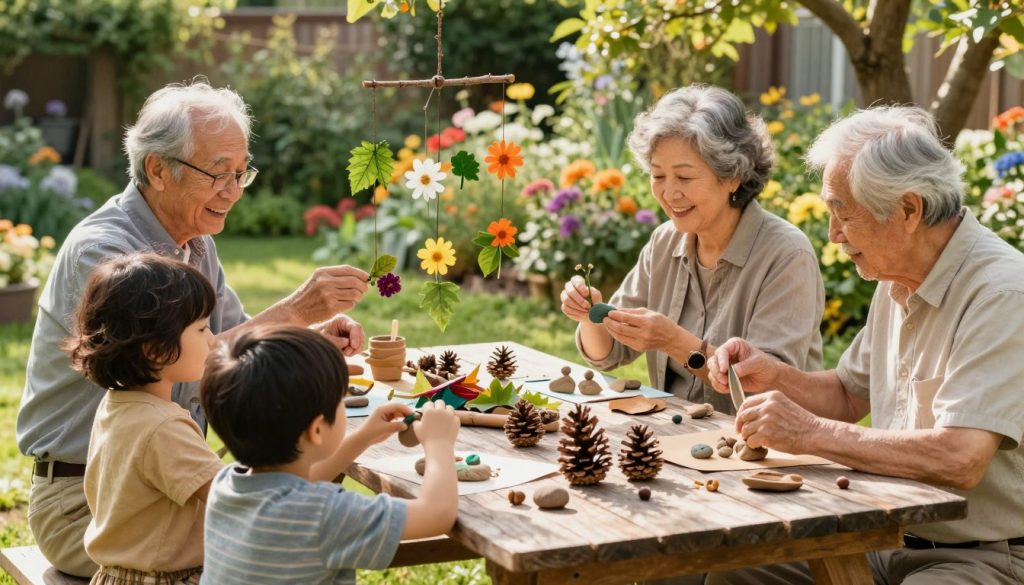
Terrariums, pinecone feeders, and garden beds
Make jar terrariums to teach about water cycles and plants. Use gravel, charcoal, soil, and succulents. It’s a project you can check on every week.
Make bird feeders from pinecones and birdseed. This teaches kids about food chains and bird watching.
Start a small garden with herbs or veggies. Assign simple tasks to teach kids about caring for plants. These activities become family traditions over the years.
Upcycling into instruments and tiny homes
Turn tin cans into drums with balloons and rubber bands. Decorate them with paint or tape to teach about sound. Build fairy houses from recycled items to encourage creativity and carpentry skills.
Teach kids to reuse items safely. Use tools that are safe for their age. This makes them feel proud of their creations.
Walks, collections, and creative prompts
Go on walks to collect items for crafts. Ask kids to notice colors and shapes. This turns exploration into art and teaches observation.
Balance guided tasks with free play. This respects different interests and attention spans. Activities like nature journals and collages keep everyone engaged.
| Project | Materials | Learning Focus | Suggested Age |
|---|---|---|---|
| Mini terrarium | Jar, gravel, charcoal, potting soil, succulent | Water cycle, plant care, observation | 5–12 years |
| Pinecone bird feeder | Pinecones, seed butter, birdseed, string | Ecology, patience, wildlife ID | 3–10 years |
| Tin-can drum | Clean tin can, balloon, rubber bands, paint | Sound vibrations, rhythm, fine motor skills | 4–12 years |
| Fairy house | Recycled boxes, toilet rolls, twigs, glue | Design, construction, imaginative play | 4–10 years |
| Nature collection art | Leaves, rocks, glue, paper, crayons | Observation, composition, texture | 3–12 years |
Memory-making crafts and family history projects
Simple crafts can capture stories and create lasting rituals. These activities turn everyday moments into family traditions. They help build an archive of memories and teach about identity and values.
Scrapbooks and family history booklets
Make an “All About My Family” booklet with old photos, captions, and drawings. Have grandchildren interview grandparents and write down their answers. This way, you record stories that might otherwise be lost.
Use prompts like favorite foods or childhood games to start conversations. Date each page and note who contributed. Over time, the booklet becomes a key part of your family’s history.
Designing a family crest and tradition-based projects
Get everyone to list values, symbols, and colors that are important. Sketch ideas together and choose elements that represent your shared story. Creating a family crest makes your legacy visual and meaningful.
Make crest-making a yearly tradition. For example, create a new ornament each holiday that tells a story from that year. Small, repeatable acts build strong family traditions and keep stories alive.
Displaying and preserving keepsakes
Use frames, shadow boxes, and labeled folders to protect drawings and small mementos. Choose acid-free paper and clear labels to prevent fading and confusion. Display finished pieces in hallways or the living room to keep memories alive.
Gift preserved pieces to relatives on special days to pass on stories. Focus on shared experience, not perfection. This strengthens bonds and supports legacy building with grandchildren.
Creating inclusive, calming, and educational craft sessions
Make your craft time gentle, welcoming, and useful. You want activities that welcome different ages and abilities while giving space to breathe. Use simple choices, clear steps, and short tasks so everyone can join and feel proud.
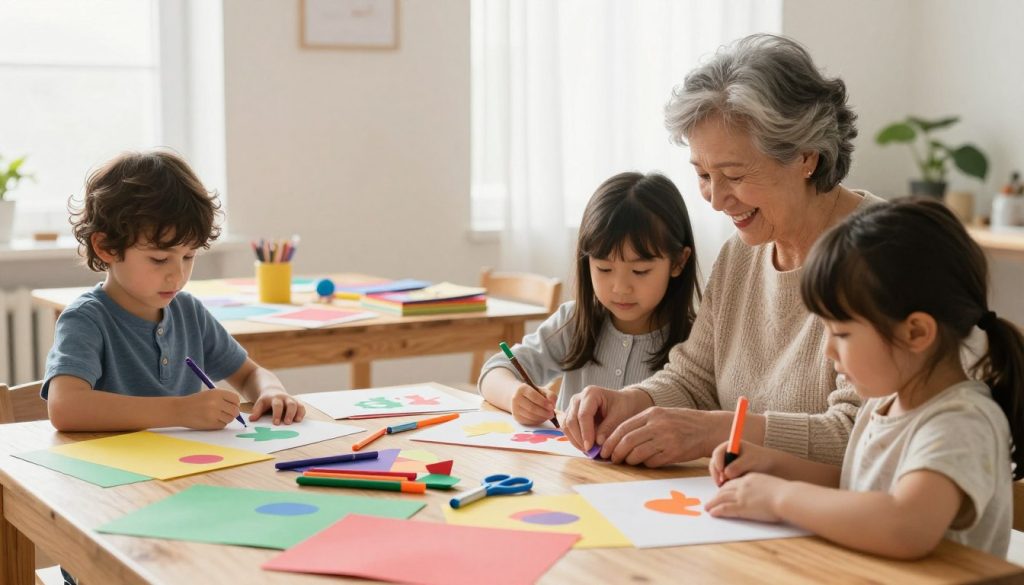
Adapting projects for different ages and abilities
Pick projects with multiple entry points so a toddler, a school-age child, and a grandparent can all work together. Offer pre-cut shapes, pre-measured ingredients, and thicker paintbrushes for easier grips. Break each craft into short segments to match attention spans and avoid frustration.
Calm, mindful craft ideas
Choose sensory, low-pressure activities such as painting to soft music, coloring mandalas, or making gratitude jars. These calm activities for grandkids promote focus and reduce anxiety. Mindfulness activities for children like guided breathing between steps help both of you slow down and connect.
Encouraging life skills through play
Turn craft steps into lessons that matter. Use measuring in recipes to teach fractions, assign cleanup tasks to build responsibility, and have kids follow simple instructions to boost confidence. Teaching life skills to grandkids through play makes chores feel like teamwork and builds lasting habits.
| Craft Type | Age Range | Adaptation Tips | Skills Taught |
|---|---|---|---|
| Mosaic jars | 2–9 years | Use large foam tiles for toddlers, smaller tiles for older kids, and adult help for glue | Fine motor, pattern recognition, patience |
| Gratitude jar | 3–12 years | Pre-write prompts for early readers, let older kids decorate labels | Mindfulness activities for children, emotional awareness |
| Simple baking | 4–14 years | Pre-measure ingredients for young kids; let older kids use measuring cups and timers | Measuring, kitchen safety, teaching life skills to grandkids |
| Planting mini pots | 2–12 years | Offer scoopers for small hands, use adaptive grips for older adults | Responsibility, patience, inclusive activities for grandchildren |
Conclusion
Choosing simple, hands-on activities with grandkids is more than just making crafts. It teaches patience, creativity, and problem-solving. By using easy materials and tailoring projects to their age, bonding becomes easy and rewarding.
Screen-free activities like edible STEM, painted rocks, or terrariums create calm spaces. They’re perfect for conversations and stories. This quality time boosts confidence and curiosity, making every afternoon special.
Displaying keepsakes, making scrapbooks, and repeating favorite projects builds family traditions. When play meets purpose, you create a legacy of skills and stories. This strengthens your bond with your grandkids.
FAQ
How does crafting together strengthen the bond between grandparents and grandkids?
Why are crafts effective at reducing screen time for grandchildren?
What mental and developmental benefits do crafts provide for children and grandparents?
How do crafts act as a bridge between generations?
What simple craft projects can we start today with minimal supplies?
How can baking be used as a learning activity with grandchildren?
Are edible STEM kits worthwhile for craft sessions?
What safety tips should I follow for inclusive cooking sessions with grandchildren?
What nature-based crafts teach science and responsibility?
How can upcycling become a creative project for grandchildren?
How do outdoor walks inspire craft ideas?
What projects help preserve family memories and history?
How should I display and preserve keepsakes made with my grandchild?
How can I adapt crafts for different ages and abilities so everyone can join in?
What are some calm, mindful craft ideas for emotional regulation?
How can crafting help teach life skills to grandchildren?
How do I turn successful crafts into lasting family traditions?
What materials should I keep on hand for regular craft sessions with grandchildren?
How do crafting sessions benefit grandparents emotionally and socially?
This post contains affiliate links. If you click on a link and make a purchase, I may earn a small commission — at no extra cost to you. Thank you for supporting this blog and helping me keep the patterns free! Read the full Affiliate Disclosure & Transparency.