
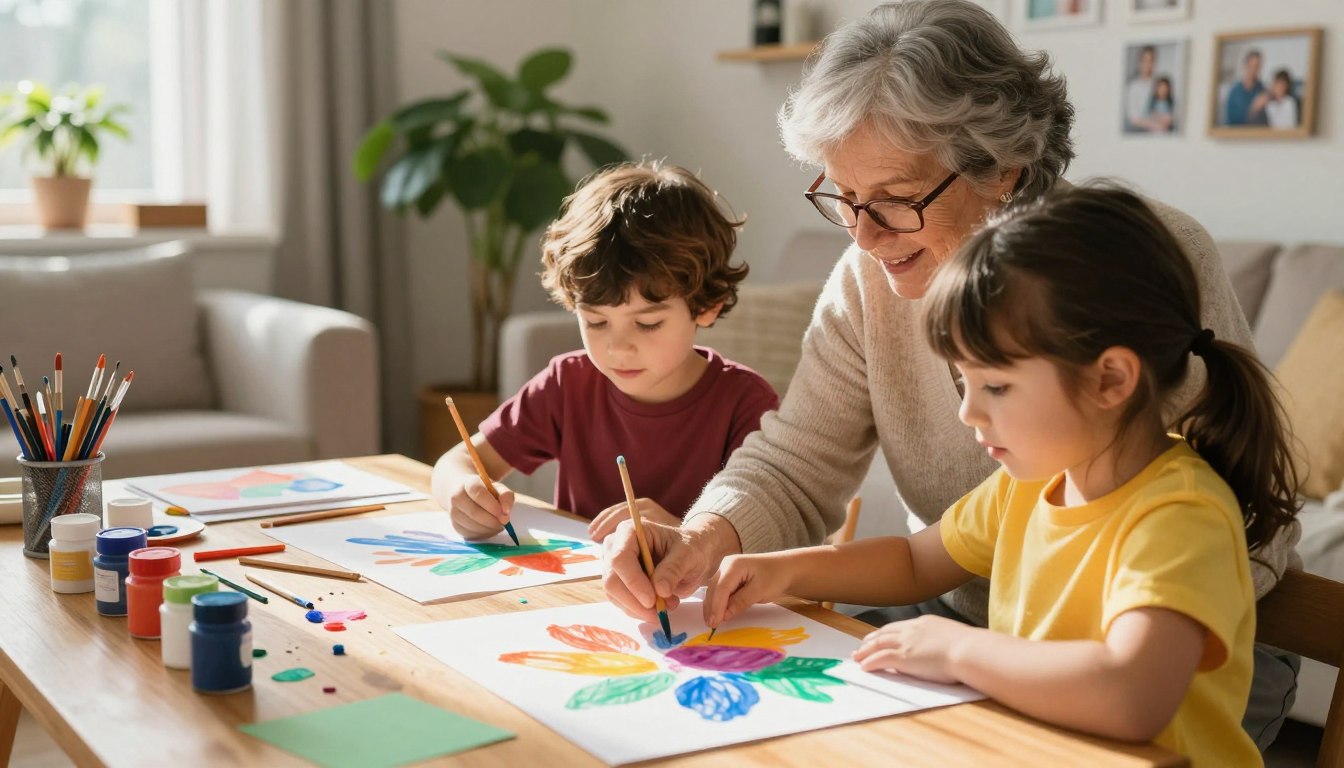
Grandparents are calm guides for curious young minds. They share stories, skills, and steady attention. This is something school schedules can’t always offer.
Activities like cooking, gardening, or telling family tales are more than fun. They are chances to build a legacy with your grandkids. By teaching tasks step by step, you teach patience, creativity, and problem-solving.
Grandparents create lasting memories with their grandkids. These memories shape identity and resilience. This guide will show you how to bond with your grandkids through activities and routines.
Key Takeaways
- Grandparents offer focused time that supports emotional and practical learning for your grandkids.
- Intergenerational bonding activities help children develop patience, creativity, and problem-solving.
- Legacy building with grandchildren strengthens family identity and preserves traditions.
- Hands-on experiences create lasting memories with grandkids and encourage resilience.
- Upcoming sections will provide concrete activities and routines you can use today.
Why Grandparents Matter: Intergenerational Learning and Emotional Connection
When grandparents join daily life, kids learn a lot. They share stories, recipes, and skills that connect kids to their roots. This connection enriches their activities and makes them more meaningful.
The unique value of intergenerational learning
Grandparents teach crafts and family recipes, passing down traditions. These lessons give kids a sense of who they are. They learn about local history, simple carpentry, and language skills not covered in school.
Emotional connection and stability
A strong bond between grandparents and grandchildren brings calm to kids. It boosts their self-confidence and helps them cope with big changes. Spending time with a grandparent can make kids more resilient.
Mutual benefits for grandparents and grandchildren
Grandkids learn life skills, vocabulary, and empathy through play and chores. Grandparents find purpose, mental stimulation, and joy in these moments. This exchange makes activities rewarding for both.
| Benefit | What Kids Gain | What Grandparents Gain |
|---|---|---|
| Storytelling and memory | Language growth, cultural identity, listening skills | Mental engagement, sense of legacy |
| Hands-on projects | Practical skills, patience, fine motor control | Active routine, pride in mentoring |
| Routine visits | Emotional security, resilience, social skills | Social connection, reduced isolation |
| Shared traditions | Knowledge of family traditions across generations, belonging | Preservation of heritage, meaningful role |
Hands-on Activities That Teach Patience and Creativity
You can make everyday moments into learning labs. Here, patience and creativity grow. Hands-on projects are great for spending quality time with your grandkids. They teach important life skills.
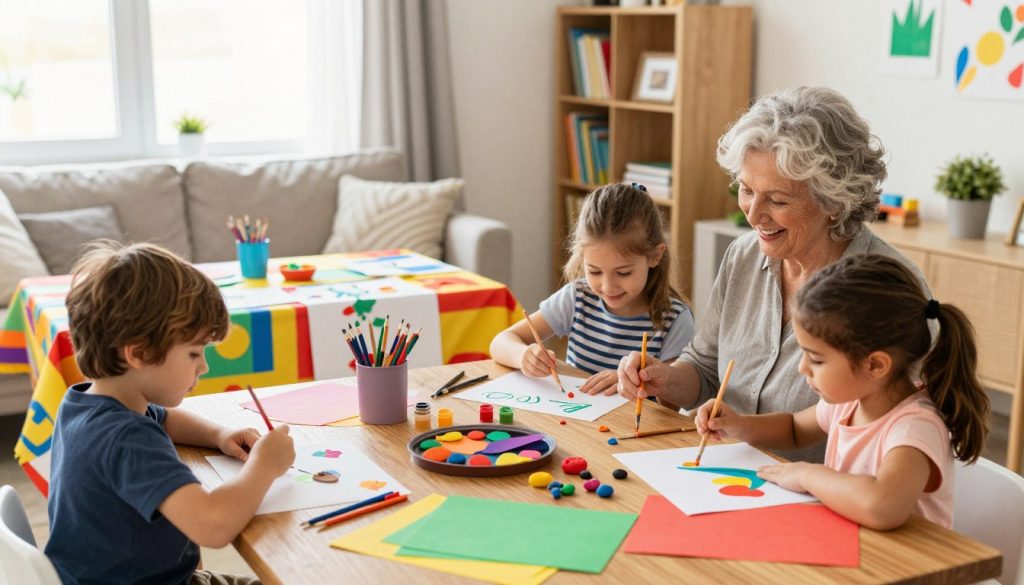
Cooking and baking are fun ways to share family recipes. You can make lasagna, pot roast, or even cookies. These activities teach kids about following steps and waiting for results.
Decorating cookies or making a special sauce lets kids be creative. It’s a great way to teach them about healthy eating. They learn to read recipes and time the oven.
Gardening and plant care teach kids about life cycles. You can plant vegetables, an herb patch, or even a butterfly garden. Composting shows them the value of recycling.
Gardening is calming for kids because it’s slow and sensory. It teaches them responsibility through daily chores. They learn to care for plants and watch them grow.
Sewing, knitting, and simple crafts improve fine motor skills and focus. Start with something simple like a scarf or a pillowcase. Kids can choose colors and patterns, sparking their imagination.
Finishing a small project teaches them to keep going. These activities also teach sustainability by fixing things instead of throwing them away.
Here are some tips for success: pick tasks that fit their age, use safe tools, and aim for small goals. Celebrate each step to boost their confidence. This shows the value of hard work during your time together.
Learning Through Play: Games, Music, and Outdoor Adventures
Learning through play with your grandkids is a great way to teach lasting skills. It helps them learn patience, take turns, solve problems, and express feelings. Keep activities short and match them to their age to boost attention and curiosity.
Board games and cards are great for thinking and fair play. Classics like Chess and Scrabble improve strategy and math skills. Simple games teach kids about taking turns and handling wins and losses.
Music and dance are also excellent for kids. They help with memory, coordination, and expressing feelings. Learning an instrument or singing songs together can strengthen your bond and bring joy.
Outdoor activities like fishing and camping teach patience and self-reliance. These activities help kids learn to persevere, stay safe, and respect nature. Short hikes and simple navigation tasks make learning fun and hands-on.
Here’s a quick guide to help you choose the right activity for your grandkids.
| Activity | Key Skill | Best Age Range | Why It Helps |
|---|---|---|---|
| Board games (Chess, Scrabble) | Strategy, turn-taking | 6–12 years | Builds problem-solving and emotional control during play |
| Card games (Gin Rummy, Go Fish) | Numeracy, memory | 4–10 years | Encourages counting, pattern recognition, and fair play |
| Instrument lessons (piano, guitar) | Memory, coordination | 5–15 years | Improves focus and creative expression with regular practice |
| Dance and movement | Coordination, social joy | 3–12 years | Strengthens bonding with grandkids through shared physical activity |
| Fishing and camping | Patience, navigation | 6–16 years | Offers hands-on life skills and respect for the outdoors |
Keep activities varied and age-appropriate to support growth without pressure. Mix board games, music, and outdoor activities for grandkids into your routine. This makes bonding with grandkids fun and meaningful. Prioritize screen free activities to protect focus and encourage richer interactions.
Passing Down Traditions, Stories, and Life Skills
Sharing family memories is more than just telling stories. It’s about building vocabulary, cultural awareness, and strong bonds. Use short stories about relatives and daily moments to make language exciting for your grandkids.
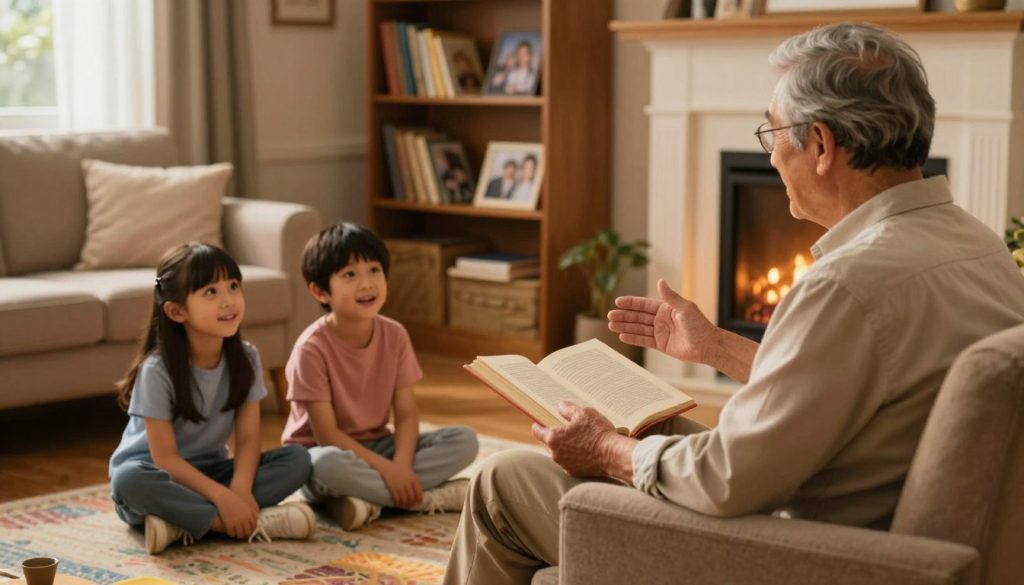
Storytelling for cultural continuity and language development
Encourage your grandkids to add to a story. Record or write their parts in a family notebook. This helps with storytelling and keeps traditions alive.
Read stories and picture books together. Ask questions to spark their curiosity. When kids help tell a family story, they feel more confident and connected.
Handy skills and craftsmanship
Teach them to make simple things like birdhouses or shelves. Break tasks into safe steps so they learn about tools and solving problems. These projects teach patience and resourcefulness.
Show them how to fix simple things like a loose hinge or sew a button. Your hands-on lessons help them feel independent and proud of their creations.
Financial literacy and practical decision-making
Use three jars for spending, saving, and giving to teach about choices. Open a savings account and track progress together. This makes money concepts clear for kids.
Plan a simple family budget for a weekend treat. Discuss priorities and trade-offs while deciding. Teaching them about money builds smart decision-making skills.
Keep traditions alive with photo albums, scrapbooks, or a family book. Create a basic family tree with stories and dates. These keepsakes help kids connect with their family’s history.
Engaging Your grandkids: Screen-free Ideas and Routine Building
Plan simple, repeatable activities for your visits. Choose screen-free activities that boost skills and spark curiosity. Small rituals help share meaningful moments and create lasting memories.
Screen-free activities to encourage focus and creativity
Try board games, baking, gardening, and crafts to improve focus and creativity. Photography walks and scrapbooking teach observation and create keepsakes. Reading aloud and journaling enhance language and reflection without screens.
Creating traditions and quality time routines
Start a weekly baking day or a monthly nature walk for predictability. Bedtime story rituals and holiday craft mornings become cherished customs. Celebrate small milestones to encourage patience and creative growth.
Integrating grandparents into learning and daily life
Get involved in homework, museum visits, or skill lessons. Plan virtual visits for shared reading or show-and-tell when distance is a challenge. Activities planned around grandparents’ interests increase kid engagement.
Mindfulness activities for children
Teach short breathing exercises, gentle yoga, and simple journaling. These activities help calm busy minds and improve emotional regulation. They make transitions smoother during routine building with grandchildren.
Practical plan for lasting results
Match activities to age and safety needs. Set clear steps and track progress with rewards. Use a visible calendar to plan activities throughout the month. Consistent practice turns fun moments into lifelong skills.
Conclusion
You can make bonding with grandkids a daily habit. It shapes character and brings joy. Hands-on activities like cooking, gardening, and games teach patience and creativity.
These activities create warm memories with your grandkids. They also build emotional safety and support what kids learn at school.
Choose screen-free moments and simple traditions to build a legacy with your grandkids. Storytelling, music, and practical skills pass on culture and decision-making. These practices boost confidence, problem-solving, and emotional resilience over time.
The grandparents and grandchildren relationship is mutual. Your involvement gives purpose and mental stimulation. It also helps your grandkids become more patient and creative.
Use these ideas to make every day special. Turn ordinary days into skill-rich, memorable experiences. This helps in raising confident children through play and leaves a lasting family legacy.
FAQ
What is intergenerational learning and why does it matter?
How do grandparents create emotional connection and stability for grandchildren?
What benefits do both generations get from spending time together?
How can cooking and baking teach patience and creativity?
What gardening activities work well with grandkids?
Which sewing, knitting, or craft projects are best for young children?
How do board games and card games help development?
Can music and dance improve my grandchild’s skills?
What outdoor activities teach patience and self-reliance?
How can storytelling preserve family traditions and boost literacy?
What handy skills and craftsmanship are appropriate to teach?
How do you teach financial literacy to grandkids?
What are effective screen-free activities to recommend?
How do I create meaningful traditions and routines with my grandkids?
What if grandchildren live far away—how can grandparents stay involved?
How do mindfulness and calm activities help children?
How do I choose age-appropriate tasks and keep them safe?
How can I measure progress and celebrate milestones?
What role should parents play when grandparents teach skills?
How do these activities support school learning?
How do grandparents teach patience and creativity most effectively?
This post contains affiliate links. If you click on a link and make a purchase, I may earn a small commission — at no extra cost to you. Thank you for supporting this blog and helping me keep the patterns free! Read the full Affiliate Disclosure & Transparency.