
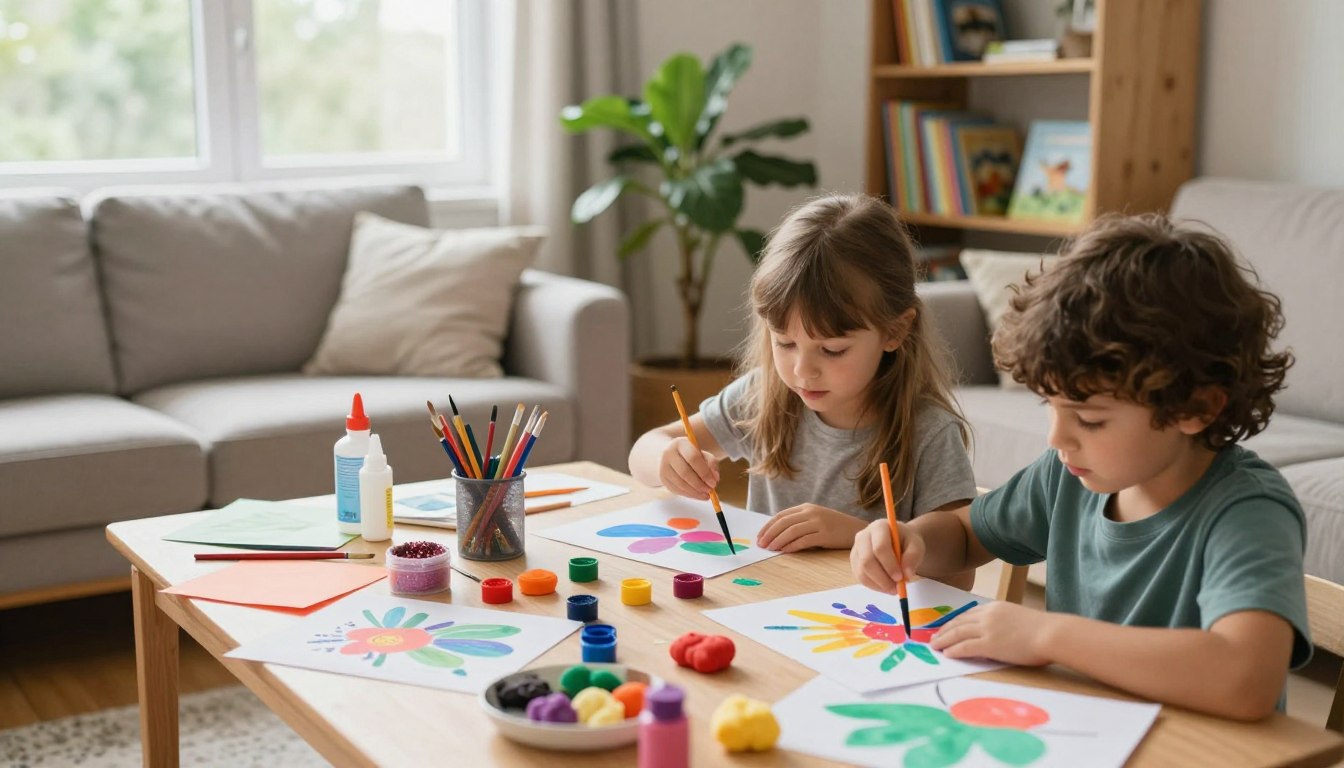
You want your grandkids to be calm, curious, and confident. Creative activities are a simple way to help them grow while spending quality time together. When kids work with paper, paint, or cardboard, they forget about time. They become engineers, dreamers, and artists.
As a grandparent, you become a guide, not just a fixer. You learn to value the journey over the end result. Craft time teaches patience and emotional control. Even small mistakes, like a smudged painting, are chances to teach resilience and creative thinking.
These activities improve many skills, like self-regulation and social skills. They also strengthen bonds between generations. This guide offers fun, screen-free activities and tips for making mistakes into family traditions.
Key Takeaways
- Creative activities for grandkids build patience by encouraging focused, process-driven play.
- Bonding with grandkids happens naturally during hands-on projects and shared problem solving.
- Quality time with grandchildren that emphasizes effort helps grow confidence and resilience.
- Simple supplies—paper, paint, clay—become tools for learning emotional regulation and motor skills.
- This guide gives practical grandkids activities that are screen free and easy to adapt at home.
Why creative activities matter for patience and confidence
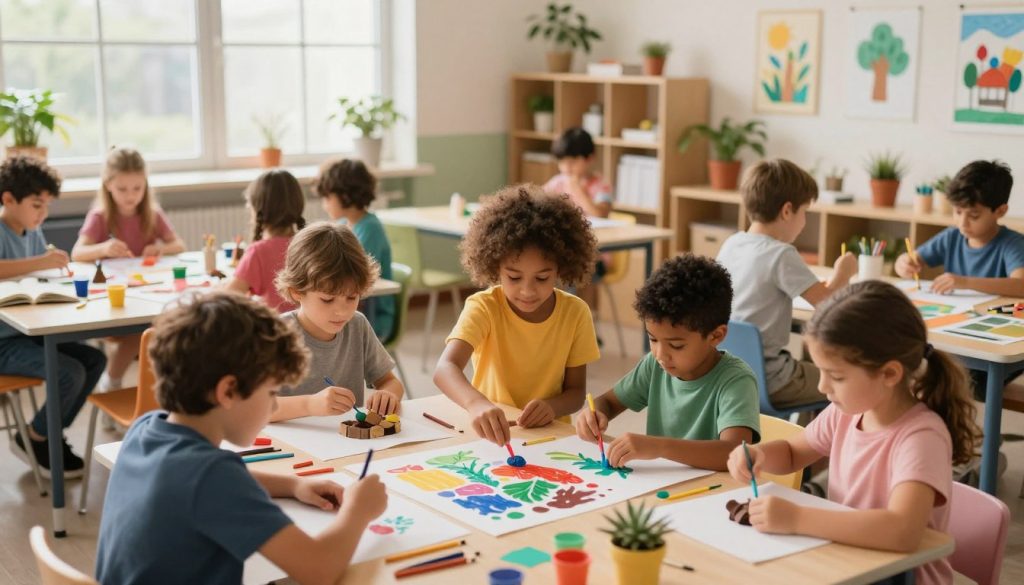
Creative projects show kids how to go from idea to result. They see things like sketching, mixing paint, or shaping clay grow over time. This makes waiting a meaningful part of the process.
Guiding a child through a craft or recipe teaches them about delayed rewards. Waiting for paint to dry or dough to rise helps them learn patience. Games like pass-the-parcel or baking tasks also teach them to enjoy the wait.
How hands-on projects teach delayed gratification
Hands-on projects need pauses for drying, cooling, or sequencing. These pauses are not empty or frustrating if seen as part of the work. You can highlight small achievements while waiting, which helps control impulses and builds self-control.
Doing activities with your grandchildren is a natural way to teach this skill. Simple rituals like measuring, timing, and checking progress make learning fun and teach patience.
Creative play as emotional regulation and expression
Art, music, and movement let kids express feelings they can’t yet put into words. When a child paints a storm or molds a shape from clay, you see their emotions. This safe way of expressing feelings helps them manage big emotions and calm down.
Sensory play and storytelling reduce stress from screens and help kids name their feelings. Naming feelings helps them understand and manage their emotions better. This strengthens your emotional bond with your grandchildren.
Evidence from child development: executive function and resilience
Planning a project requires setting goals, sequencing steps, and checking results. These tasks are key to executive function. Strong executive function leads to better focus in school and problem-solving skills in life.
Creative activities encourage trying again and again. When something doesn’t work out, it’s seen as an experiment. This mindset builds resilience. Through repeated creative efforts, kids develop confidence and the courage to try again.
| Activity Type | What it teaches | How you can support |
|---|---|---|
| Process crafts (painting, clay) | Delayed gratification, fine motor skills | Set clear steps, celebrate each stage |
| Baking and cooking | Timing, sequencing, patience | Assign small roles, check progress together |
| Music and movement | Emotion expression, self-regulation | Encourage improvisation and naming feelings |
| Collaborative builds (blocks, puzzles) | Turn-taking, executive function, teamwork | Rotate roles, prompt planning and reflection |
Practical creative activities that build patience
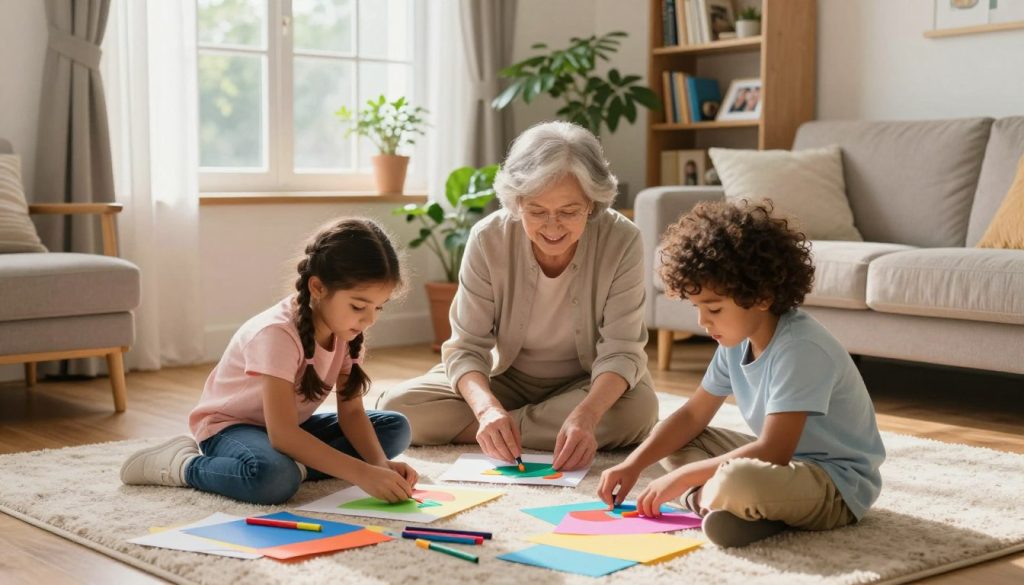
Start projects that slow down and reward focus. These activities are great for grandkids and can be part of your routine. Add the image below to create a calm space for exploration.
Slow, process-based crafts
Look for crafts that take time to complete. Watercolors, mixed-media collages, and clay modeling are good choices. Explain the drying process to make the experience predictable.
Give small tasks during waiting times, like sketching or making a color palette. Ask questions when the project changes. This helps kids reflect and practice mindfulness.
These crafts improve fine motor skills and focus. Kids learn to appreciate the journey, not just the end result. Praise their effort and notice small improvements.
Gardening and terrariums
Start with a terrarium to show how it changes. Plant fast-growing seeds like radish and cress for quick results. Potted herbs let kids care for them and see growth over time.
Introduce simple routines like a watering chart or growth journal. These activities teach responsibility and the value of waiting. Make it fun by using prompts like “catch the drizzle.”
Gardening teaches patience through regular care. It builds pride in nurturing and makes waiting a positive experience. This supports calm activities and improves focus.
Puzzles, marble runs, and construction sets
Choose puzzles and building sets that match your grandkids’ skill level. Start with simple goals and add more challenges as they improve. These toys reward planning and problem-solving.
Encourage kids to solve problems on their own when things don’t work. Celebrate small victories like completing a section or fixing a problem. Focus on effort, not perfection.
These activities teach the value of careful planning and effort. They are calming and help kids develop mindfulness through focused attention and patience.
How creative activities boost confidence and problem-solving
Creative projects help kids feel more in control and think better. Letting them pick materials and plan helps them make decisions. This builds confidence and problem-solving skills, great for teaching life skills to grandkids.
Start by guiding, not doing it all. Ask questions, offer choices, and let them sketch plans. Encourage them to make lists or quick drawings. These steps help them plan and build confidence.
See mistakes as chances to learn. If a tower falls or paint spills, ask questions. Use phrases that make them feel okay to try again.
- “What did that teach you?”
- “What could we try next?”
- “How might we change one thing and test it?”
These questions help kids see failure as a chance to try again. They learn different ways to solve problems. This keeps learning fun and light.
Group projects also help kids learn to work together. Activities like making collages or puppets teach them to share and work as a team. This builds empathy and teamwork skills.
Set simple rules to avoid fights. Agree on sharing, use timers, and talk about what worked after. This helps kids learn to listen, be patient, and speak up.
| Activity | Skill Focus | Grandparent Role |
|---|---|---|
| Design-a-mini-garden | Planning, patience, responsibility | Provide pots and seeds, ask planning questions, observe growth |
| Puppet-show collaboration | Turn-taking, storytelling, public confidence | Offer materials, prompt lines, manage rehearsals |
| Build-and-test bridges (craft sticks) | Iteration, problem-solving, resilience | Encourage tests, ask “what else?” questions, document attempts |
| Family holiday mural | Shared responsibility, pride, negotiation | Facilitate roles, time turns, lead a calm debrief |
Activities and ideas for grandparents: engaging your grandkids
Turn afternoons into special moments with simple, low-tech projects. These activities keep kids off screens and fully involved. Choose tasks that show results over time, teaching patience and pride in their work.
Prepare materials ahead and set clear, short time frames. Mix quick crafts with longer projects to match their attention spans.
Screen free activities for grandkids that create memories
Try stone painting, making holiday ornaments, or DIY disk spinners. Paper solar system models and sensory bins are also great. These projects teach sequencing and create keepsakes.
Keep a seasonal craft box to revisit each year. This builds traditions and lasting memories with your grandkids.
Bonding with grandkids through storytelling, traditions, and legacy projects
Create an illustrated family storybook with your grandchild’s help. Use puppet shows or interactive tales to teach values and bond emotionally. Make a handwritten recipe book or quilt squares decorated by each child.
Keep a memory jar filled with drawings and short stories. This builds a legacy with your grandchildren.
Intergenerational projects that teach life skills and build emotional connection
Teach gardening, basic woodworking, sewing, or simple baking. Break lessons into short steps for small wins and engagement. These activities pass on real skills, strengthen trust, and show your grandchild you’re a source of encouragement.
Choose age-appropriate tasks and supervise when necessary. Celebrate each small milestone. Use these ideas to create routines that reinforce responsibility and pride in contributing to family rituals.
Conclusion
Creative, screen-free activities help your grandkids practice patience and problem-solving. They also build confidence and strengthen your bond. Projects like painting or building a marble run offer quality time and skills growth.
Let your grandkids lead and see mistakes as learning chances. Mix short tasks with longer projects to keep them interested. These habits teach resilience and creativity, deepening your connection through shared experiences.
Begin with simple activities like planting seeds or building a puzzle. Keep these traditions alive and ask open-ended questions. Over time, you’ll see your memories and your grandkids’ confidence grow.
Choose a project today, like planting seeds or telling a story. Watch as patience and self-belief grow, along with your bond. Hands-on activities are the best way to connect and build lasting skills.
FAQ
How do creative activities actually teach patience to my grandkids?
What kinds of projects best develop confidence and problem-solving?
How can I use art to help grandchildren regulate strong emotions?
Which activities work for short attention spans and which for long-term learning?
How can I turn mistakes into learning moments without hurting my grandchild’s confidence?
What screen-free activities create lasting family traditions and memories?
How do group projects help social skills and empathy in grandchildren?
What practical safety and pacing tips should grandparents follow for skill-based projects?
How can I encourage my grandchild to lead a project without taking over?
What are easy starter projects I can try today to build patience and confidence?
This post contains affiliate links. If you click on a link and make a purchase, I may earn a small commission — at no extra cost to you. Thank you for supporting this blog and helping me keep the patterns free! Read the full Affiliate Disclosure & Transparency.